22 June 1941 to 9 May 1945
All stories
All 75 stories of the project, month by month: 48 chapters from 22 June 1941 to Victory Day. Each one can be opened on the interactive map.
Chapter 1 · June 1941
The morning that changed everything
Sunday 22 June 1941 began like any summer day: school-leavers had just danced at their graduation balls. At dawn bombs and shells rained down on the country as the enemy advanced from the Baltic to the Black Sea. Minsk fell on 28 June, but the border guards and the defenders of Brest fought to the last.
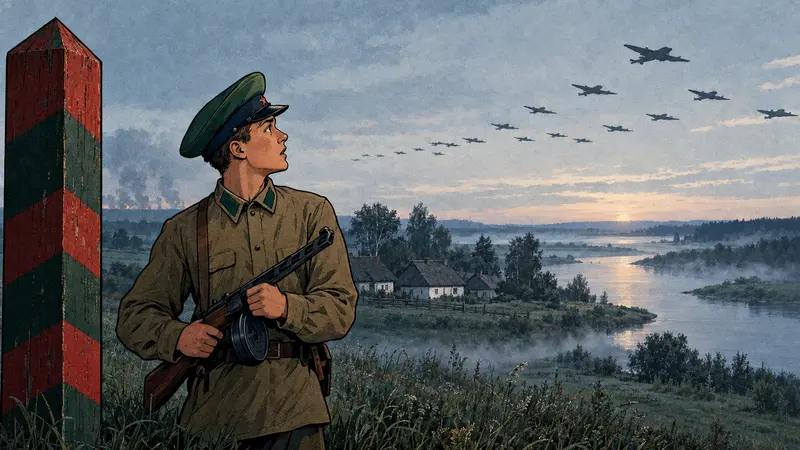 22 June 1941The war beginsBrest, western borderAt dawn on 22 June 1941, at 4 a.m., Nazi Germany attacked the Soviet Union without declaring war. Planes appeared over sleeping towns and tanks rolled across the border. This was the first of the 1,418 days of the Great Patriotic War.
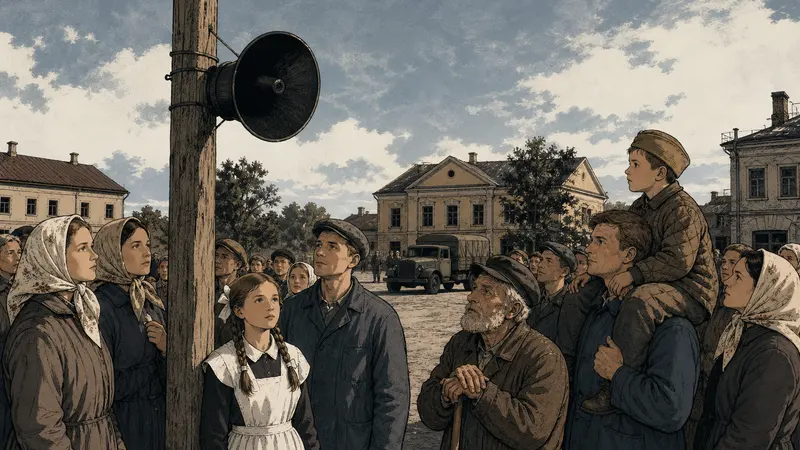 22 June 1941“Victory will be ours!”MoscowAt noon the whole country gathered around loudspeakers as Vyacheslav Molotov spoke on the radio. He ended with words people repeated for four years: “Our cause is just. The enemy will be defeated. Victory will be ours!”
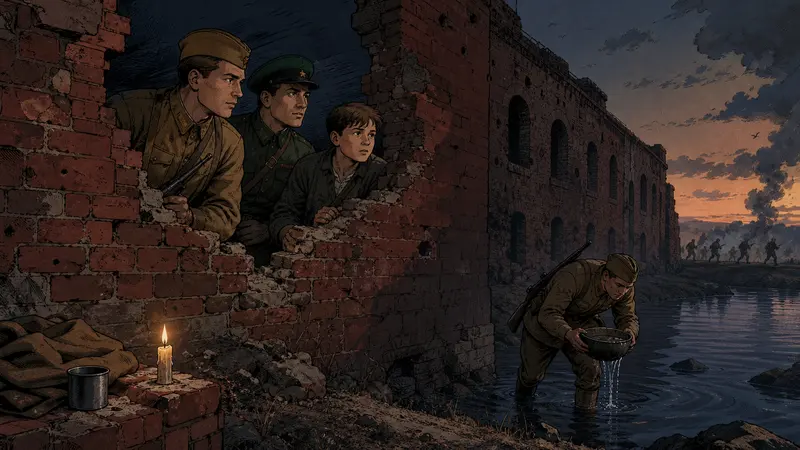 June 1941The fortress that did not surrenderBrest FortressThe enemy expected to take Brest Fortress in a few hours. Its defenders (soldiers, border guards, even officers’ children) held out for almost a month, far behind the front line. Later someone found words scratched on a wall: “I am dying, but I do not surrender. Farewell, Motherland. 20/VII/41.”
Chapter 2 · July 1941
“Brothers and sisters!”
On 3 July Stalin spoke to the nation on the radio: “Brothers and sisters!” The enemy was driving deep into the country, but at Smolensk its “lightning war” stalled for the first time. Hundreds of thousands of people volunteered for the people's militia.
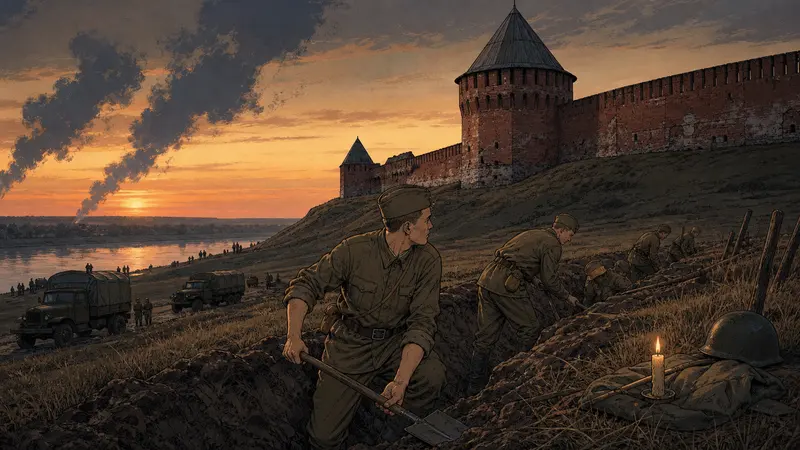 10 July 1941The Battle of SmolenskSmolenskFor two months, fierce battles raged around Smolensk. The enemy planned to reach Moscow fast, but here its “lightning war” stalled for the first time. These battles gave birth to the Soviet Guards, the title given to the most steadfast divisions.
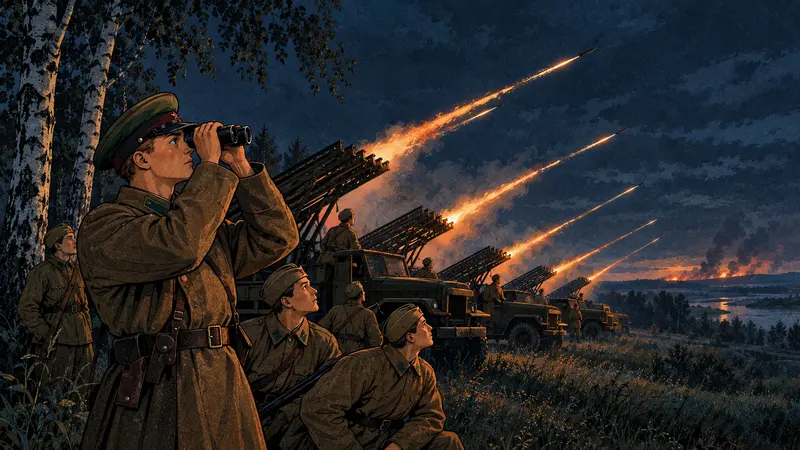 14 July 1941Katyusha’s first salvoOrshaOn 14 July 1941, Captain Ivan Flyorov’s battery first used a new weapon: rocket launchers. The salvo lasted seconds, and enemy trains at Orsha station were engulfed in fire. Soldiers affectionately nicknamed the launcher “Katyusha”, after the heroine of a popular song.
Chapter 3 · August 1941
Help from far away
Battles raged at Smolensk, Kiev, Odessa and on the approaches to Leningrad. Two routes opened for Allied aid: through Iran and across the northern seas. And Baltic Fleet pilots bombed Berlin for the first time.
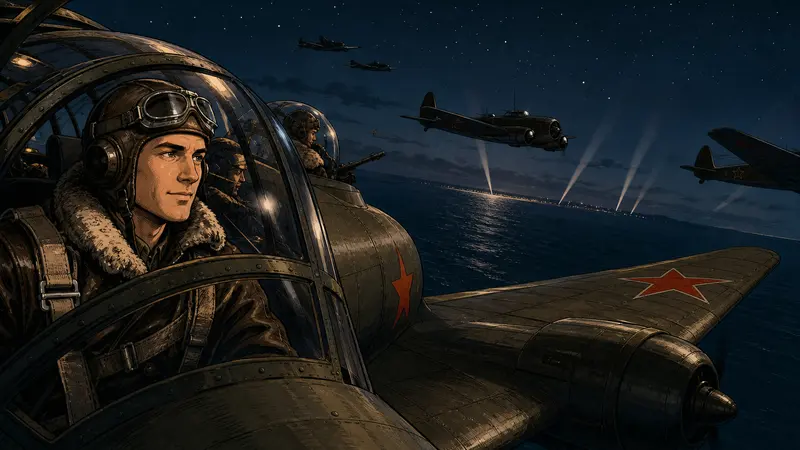 8 August 1941Bombs over BerlinSaaremaa island → BerlinNazi propaganda claimed the Soviet air force had been destroyed. But on the night of 8 August 1941, Colonel Yevgeny Preobrazhensky’s pilots took off from a small Baltic island and reached Berlin. The daring flight showed the whole world that the country was still fighting.
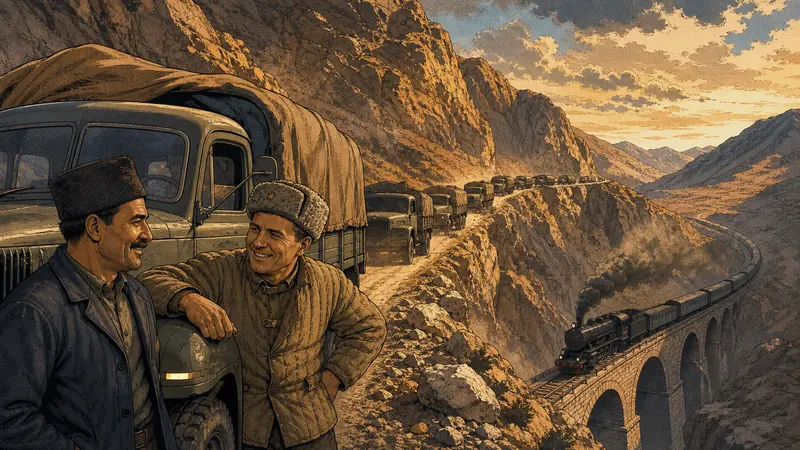 25 August 1941The Persian Corridor: the “Bridge of Victory”IranOn 25 August 1941, Soviet and British troops entered Iran. For Iranians it was a hard time. Yet one of the main Allied aid routes ran across Iran: by rail and road from the Persian Gulf to the USSR came trucks, aircraft and food. It became known as the “Bridge of Victory”.
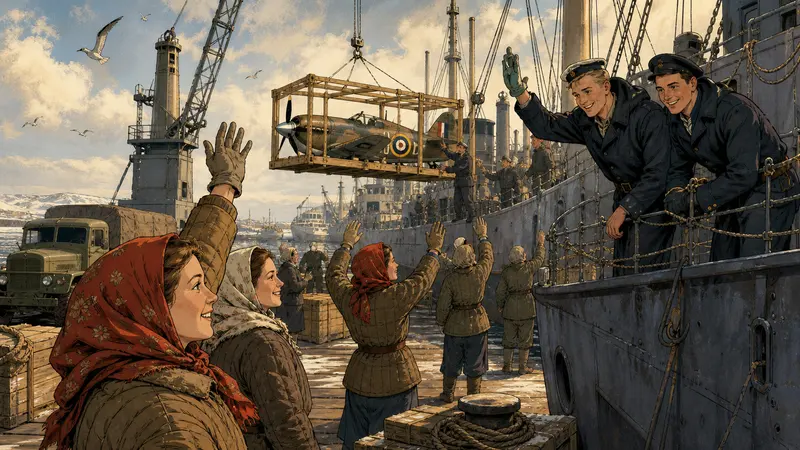 31 August 1941The first Arctic convoy, “Dervish”ArkhangelskOn 31 August 1941 the first British convoy of aid arrived in Arkhangelsk. Dozens more followed: sailors from many countries crossed icy northern seas under bombs and torpedoes to deliver tanks, planes and medicine.
Chapter 4 · September 1941
A ring around Leningrad
On 8 September the enemy closed the siege ring around Leningrad. Near Kiev huge Red Army forces were encircled, one of the heaviest defeats of the war. On 30 September the enemy began its drive on Moscow.
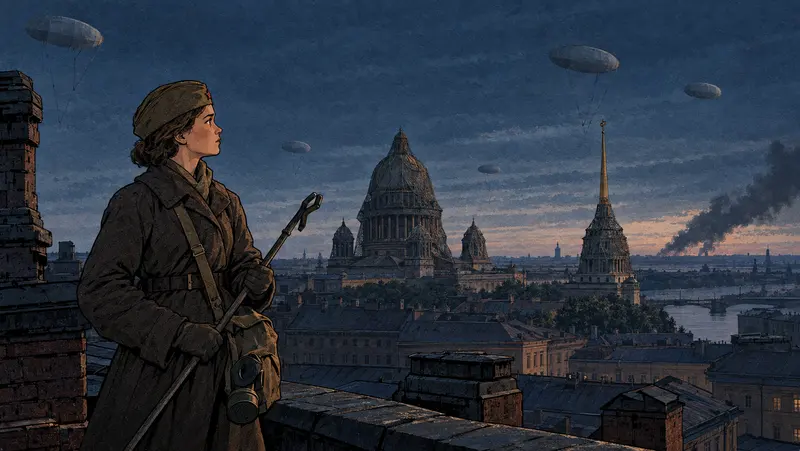 8 September 1941The siege ring closesLeningradOn 8 September 1941 the enemy closed a ring around Leningrad. A city of nearly three million people was cut off from the rest of the country. The siege would last 872 days. Leningraders went hungry and cold, but kept working, studying and defending their city.
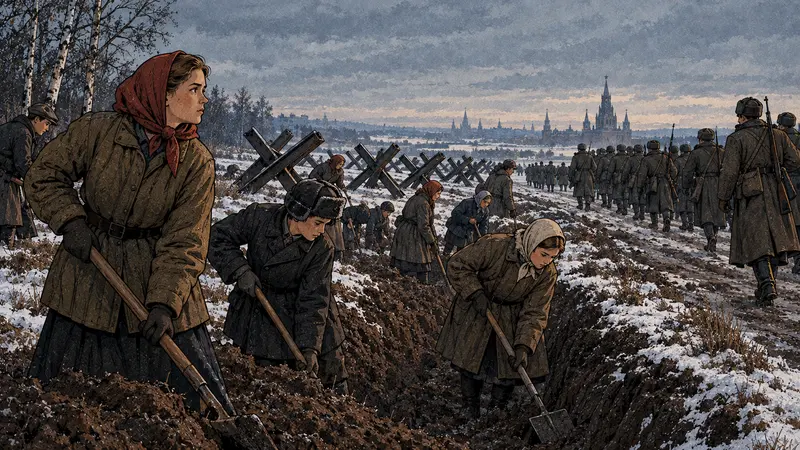 30 September 1941The enemy marches on MoscowApproaches to MoscowOn 30 September Operation Typhoon, the all-out attack on Moscow, began. The enemy was sure it would take the capital before winter. Local people, including schoolchildren and students, dug anti-tank ditches, while soldiers held every line to the last.
Chapter 5 · October 1941
Moscow in danger
Near Vyazma and Bryansk the enemy encircled several Soviet armies. In mid-October Moscow lived through its most anxious days, but it held: Muscovites built defences while trains carried whole factories to the Urals and Siberia. On 30 October the defence of Sevastopol began.
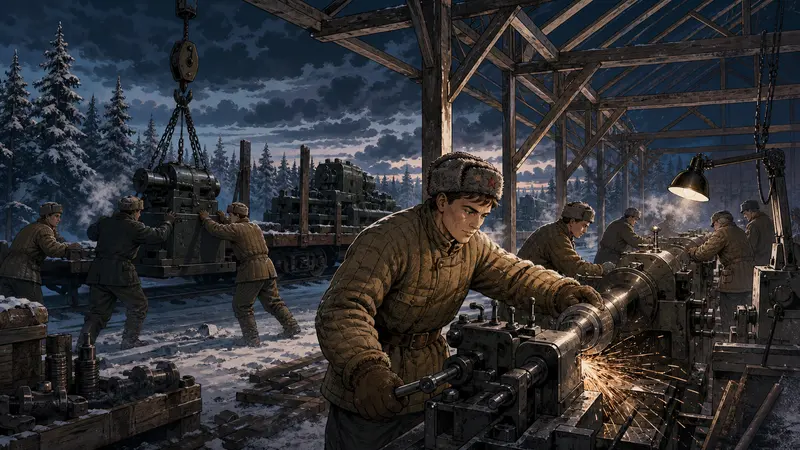 October 1941Factories on wheelsThe Urals and SiberiaIn the summer and autumn of 1941, more than 1,500 factories were moved east, machines and workers together. Some workshops restarted under the open sky, in freezing cold. Chelyabinsk became “Tankograd”, building tanks for the whole army.
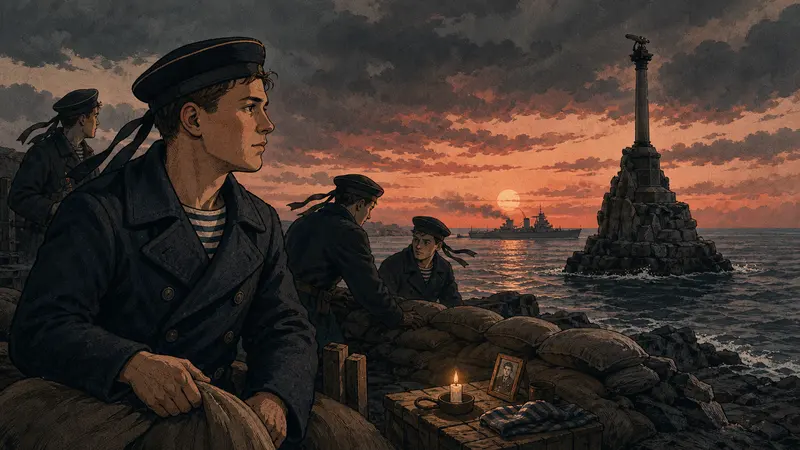 30 October 1941Sevastopol’s 250 daysSevastopolOn 30 October 1941 the defence of Sevastopol, main base of the Black Sea Fleet, began. Sailors, soldiers and residents held out for 250 days. Underground, in tunnels, there were workshops, schools and hospitals.
Chapter 6 · November 1941
A parade and a road across the ice
The enemy came within 25–30 kilometres of Moscow. But on 7 November a parade marched across Red Square, and the first lorries of bread crossed the ice of Ladoga into Leningrad. On 29 November the Red Army freed Rostov-on-Don, one of its first victories.
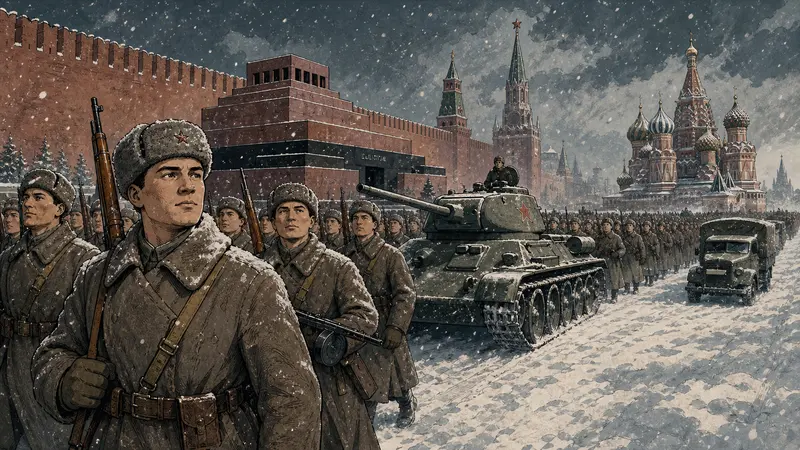 7 November 1941The parade that marched to the frontRed Square, MoscowThe enemy was close, yet on 7 November 1941 a parade was held on Red Square. Snow was falling. Soldiers marched past the Kremlin and went straight from the square to the front. The world saw that Moscow would not give in.
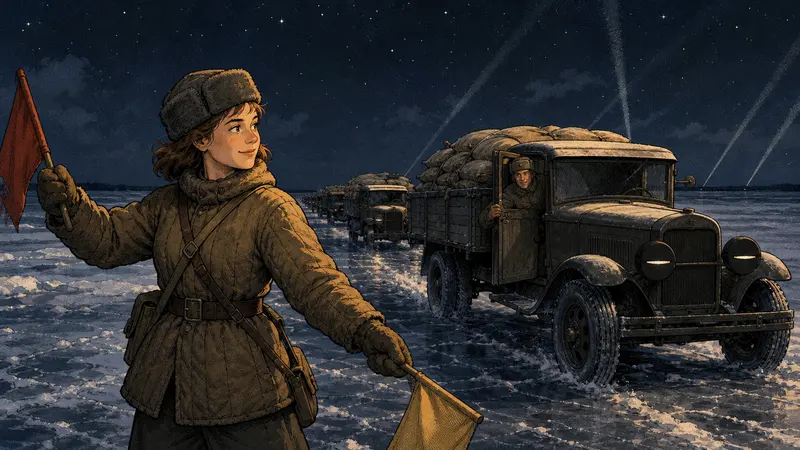 22 November 1941The Road of LifeLake LadogaThe only way into besieged Leningrad crossed Lake Ladoga. When the ice grew thick enough, the first trucks of bread drove over it on 22 November 1941. Drivers kept their doors open to jump out if the ice cracked. On the way back they carried children to safety.
Chapter 7 · December 1941
The first great victory
On 5–6 December the counter-offensive at Moscow began, and the enemy who had believed itself invincible retreated for the first time. Tikhvin and Kalinin were freed. On 7 December Japan attacked the United States, and the war became truly global.
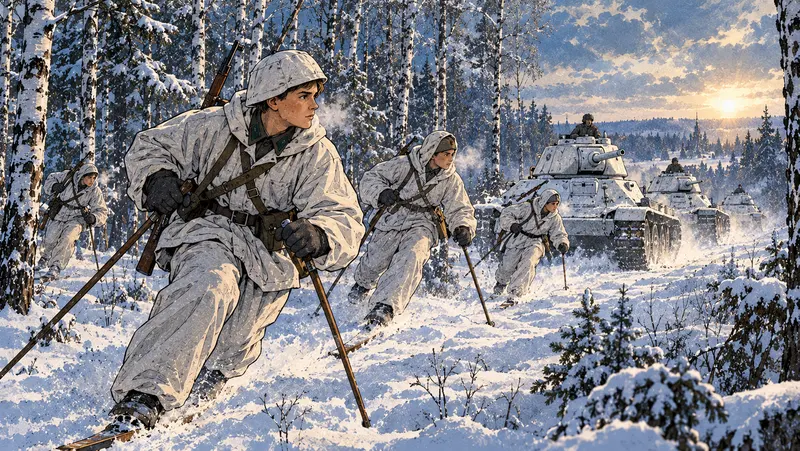 5 December 1941The counter-offensive at MoscowOutside MoscowOn 5–6 December 1941, in bitter frost, the Red Army counter-attacked and drove the enemy back 100–250 km from Moscow. It was the Nazi army’s first major defeat of the Second World War. The myth of its invincibility collapsed.
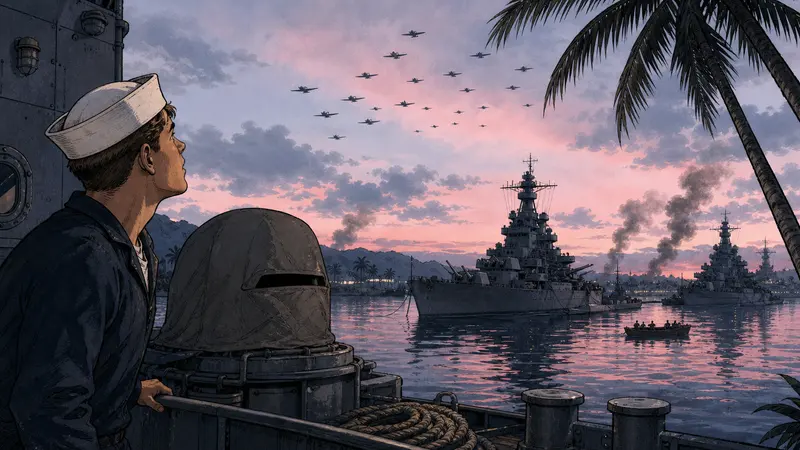 7 December 1941The war goes globalPearl Harbor, HawaiiOn 7 December 1941 Japan, Germany’s ally, attacked the US base at Pearl Harbor. The United States entered the war. Now a great coalition of the USSR, Britain, the USA and many other countries fought Nazi Germany and its allies.
Chapter 8 · January 1942
The hardest winter
On 1 January 26 nations signed the Declaration by United Nations. The Red Army kept advancing near Moscow. And besieged Leningrad endured its most terrible winter: frost, hunger, no light and no water.
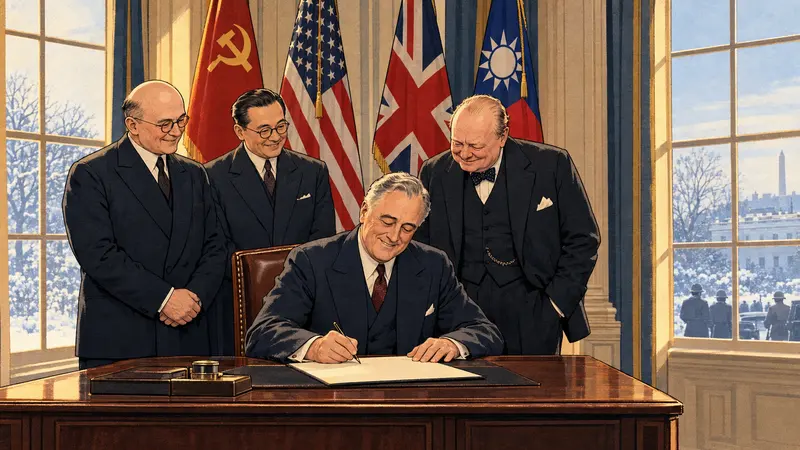 1 January 1942The Declaration by United NationsWashingtonOn 1 January 1942, 26 countries including the USSR signed a declaration to fight together until full victory and not to make a separate peace. The United Nations Organisation later grew out of this alliance.
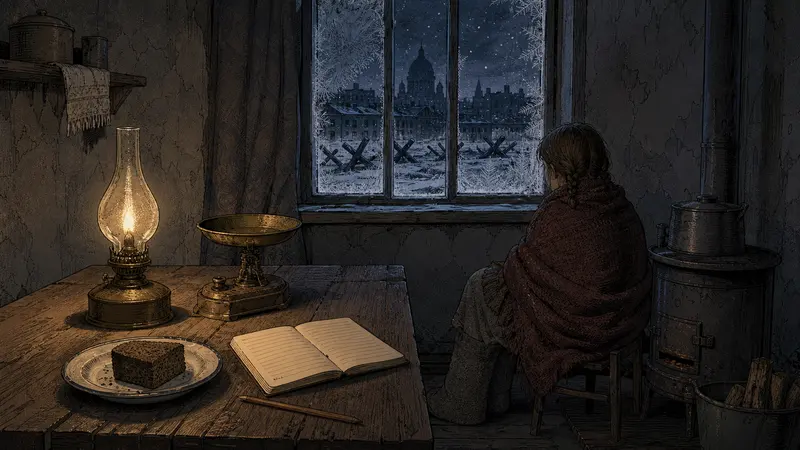 January 1942125 grams of siege breadLeningradIn the winter of 1941–42 Leningrad had no heating, no electricity, no running water. For a time, children and office workers received only 125 grams of bread a day, a piece the size of a palm. A schoolgirl, Tanya Savicheva, kept a tiny diary that became one of the best-known testimonies of the siege.
Chapter 9 · February 1942
Now the enemy gets encircled too
At Demyansk about 100,000 enemy soldiers were encircled. Soviet troops fought hard battles for Rzhev and Vyazma. The country now knew the most important thing: the enemy could be beaten.
Chapter 10 · March 1942
Music against war
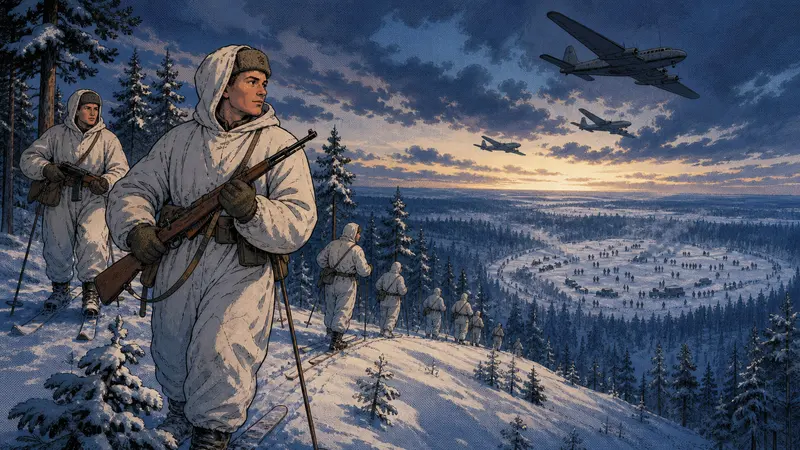
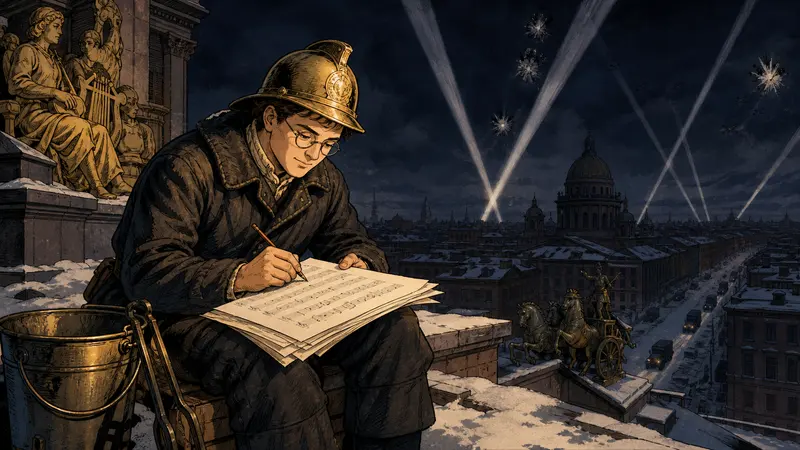
On 5 March Shostakovich's Seventh Symphony, dedicated to Leningrad, was first performed in Kuibyshev. Children and the sick were still being carried out of the besieged city along the Road of Life. The whole country was learning to live and work for the front.
Chapter 11 · April 1942
Spring in the besieged city
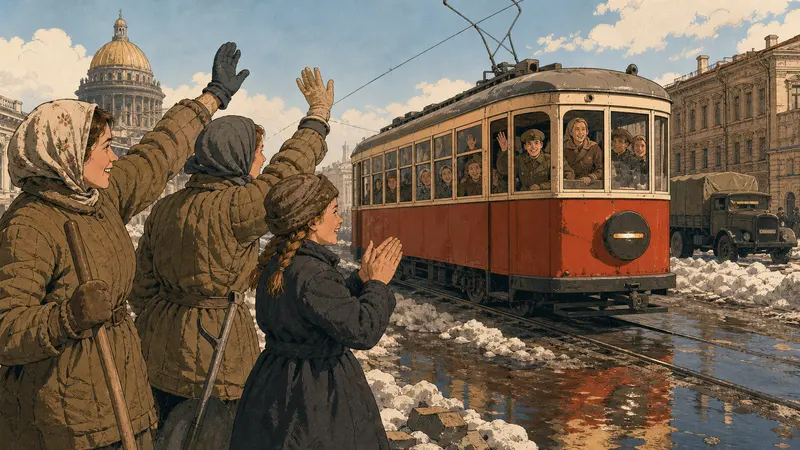
Weakened Leningraders came out to clear the streets of snow and filth so that epidemics would not break out in spring. On 15 April trams ran through the city again. Near Moscow the hard winter battles came to an end.
Chapter 12 · May 1942
A hard spring
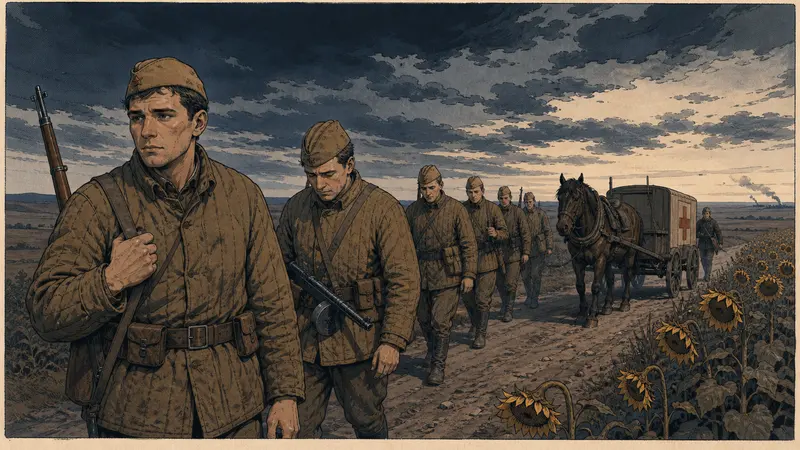
The offensive near Kharkov ended with Soviet troops encircled. In Crimea the enemy took Kerch and prepared its final assault on Sevastopol. The summer of 1942 would again bring heavy trials.
Chapter 13 · June 1942
Under water and under fire
A pipeline was laid on the bed of Ladoga and fuel flowed into besieged Leningrad. Sevastopol held on with its last strength. On 28 June the enemy launched its great summer offensive in the south. And on the other side of the world the Americans defeated the Japanese fleet at Midway.
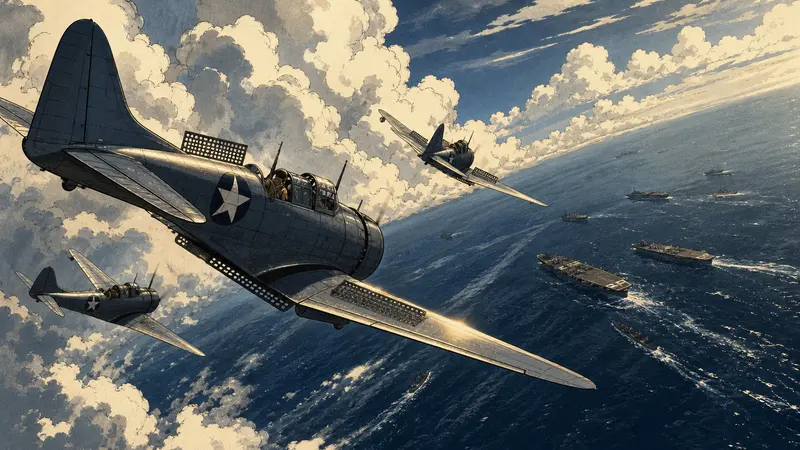 4 June 1942The Battle of MidwayMidway Atoll, Pacific OceanOn the other side of the world, on 4–7 June 1942, the US Navy destroyed Japanese aircraft carriers near Midway Atoll. It was the turning point of the war in the Pacific.
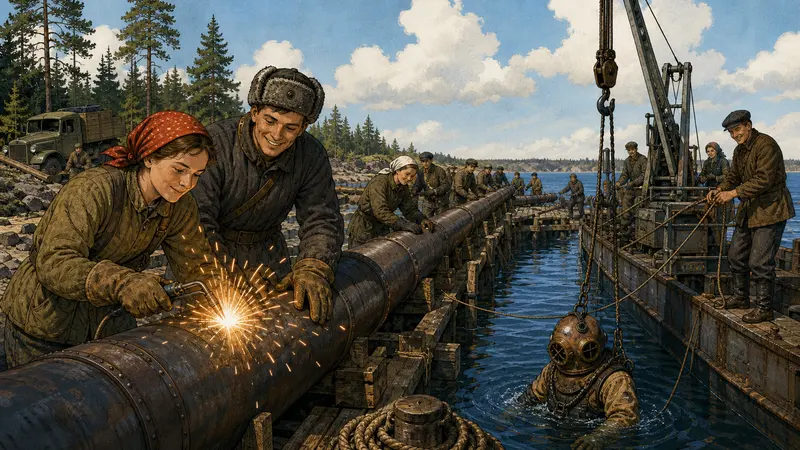 18 June 1942A pipeline under the waterLake LadogaIn summer the ice melted and the Road of Life became a water route. So engineers and divers laid a pipeline about 30 km long along the bottom of Lake Ladoga in just six weeks. In June 1942 it began carrying fuel to the city and the front.
Chapter 14 · July 1942
“Not one step back!”
The enemy was driving towards the Volga and the Caucasus. Sevastopol fell on 4 July, Rostov-on-Don on 24 July. On 17 July the Battle of Stalingrad began, and on 28 July Order No. 227 was issued: “Not one step back!”
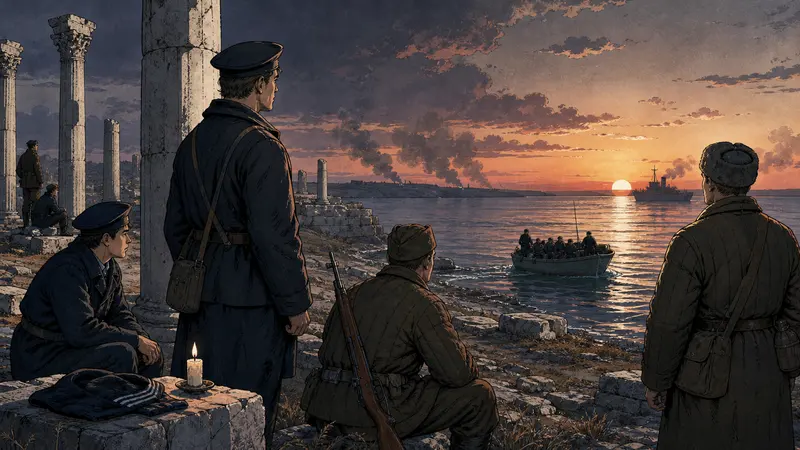 4 July 1942Sevastopol is lostSevastopolAfter 250 days of defence, in early July 1942, Sevastopol’s defenders were ordered to leave the city. Many fought to the last on Cape Chersonesus. Sevastopol would be named a Hero City, and two years later it would be liberated.
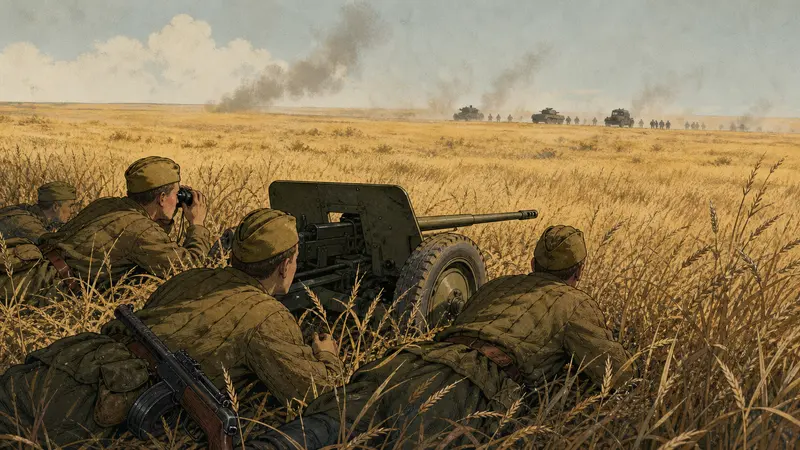 17 July 1942The Battle of Stalingrad beginsThe Don bendOn 17 July 1942 fighting began on the distant approaches to Stalingrad. From here the enemy wanted to cut the Volga, the country’s main river, and break through to Caucasus oil. Ahead lay 200 days and nights of the war’s most important battle.
Chapter 15 · August 1942
The Volga on fire
On 23 August hundreds of aircraft bombed Stalingrad. The enemy broke through to the Volga and reached the mountains of the Caucasus. And on 9 August besieged Leningrad performed the Seventh Symphony: the city told the world it was alive.
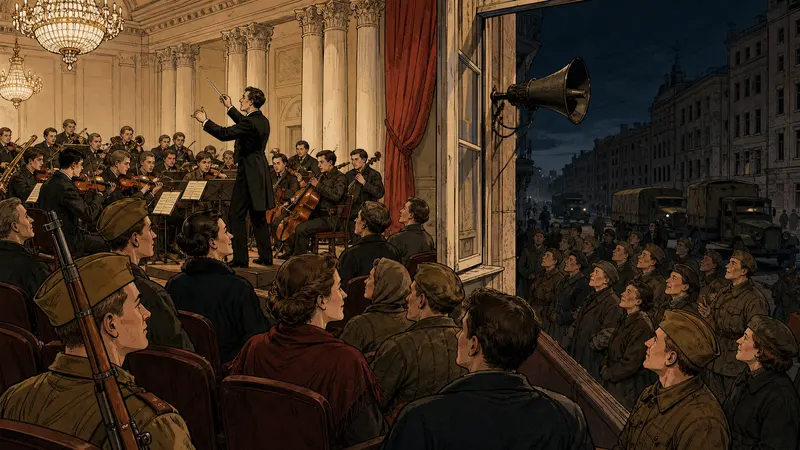 9 August 1942Music stronger than gunsPhilharmonic Hall, LeningradOn 9 August 1942 the Seventh Symphony was performed inside besieged Leningrad. Musicians weak from hunger were gathered from all over the city, and artillery silenced enemy guns beforehand so the concert would not be interrupted. It was broadcast by radio, and the enemy heard it too.
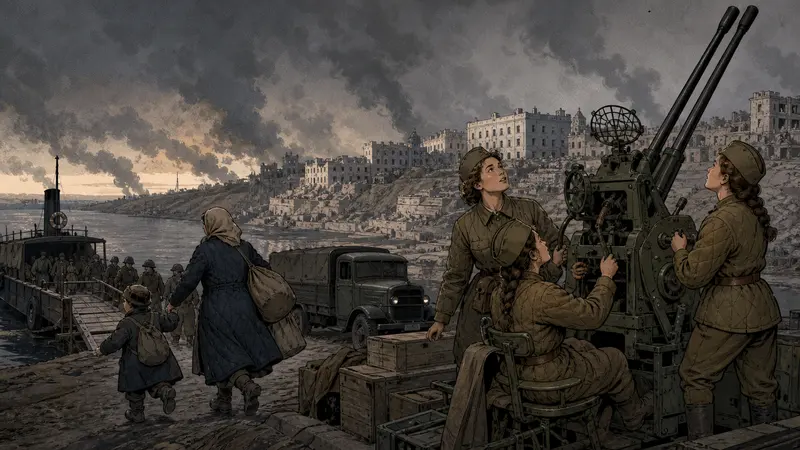 23 August 1942A city on fireStalingradOn 23 August 1942 hundreds of enemy planes bombed Stalingrad. The city was almost entirely reduced to ruins. But in those ruins soldiers and residents kept fighting for every street.
Chapter 16 · September 1942
A battle for every house
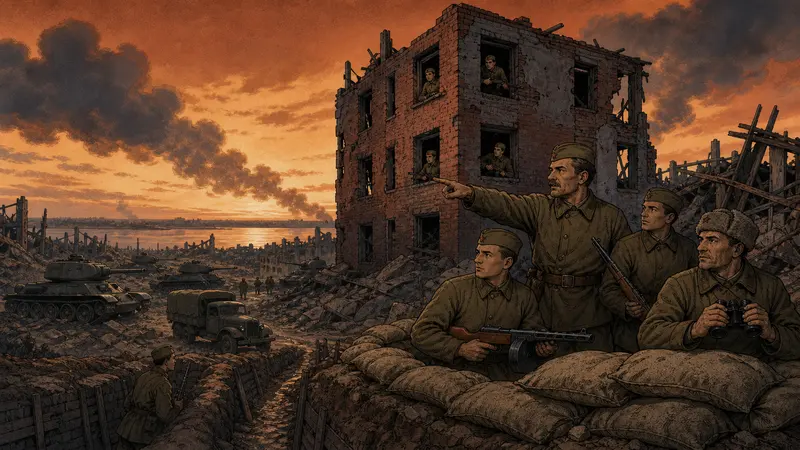
The battle had reached the streets of Stalingrad. Soldiers held every house, every floor, every flight of stairs. It was then that Sergeant Pavlov's group took a house in the city centre that the enemy never managed to capture.
Chapter 17 · October 1942
Holding on to the last
The enemy stormed the factories in northern Stalingrad; in places only a few hundred metres were left to the Volga. At El Alamein in Egypt the British went on the offensive. And in the headquarters a plan was being prepared that would change the course of the war.
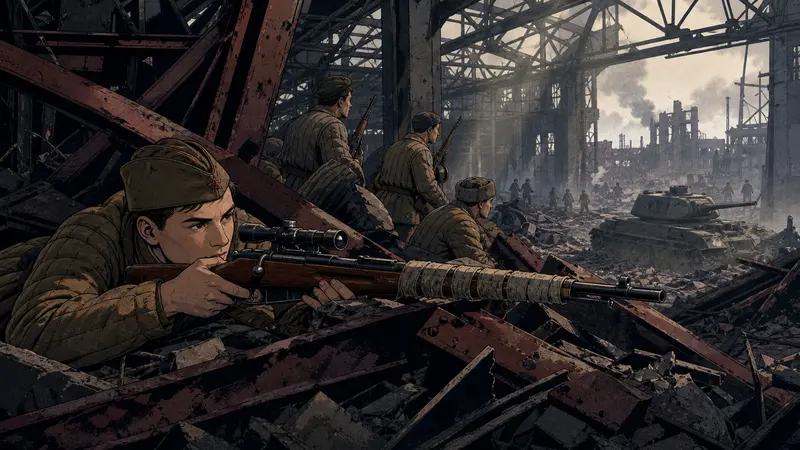 14 October 1942“There is no land for us beyond the Volga”Stalingrad’s factoriesIn October the fighting moved into the workshops of the Tractor Factory and the Barrikady plant. Sometimes the enemy held one hall and Soviet soldiers the next. Sniper Vasily Zaitsev said the words that became the battle’s motto: “There is no land for us beyond the Volga.”
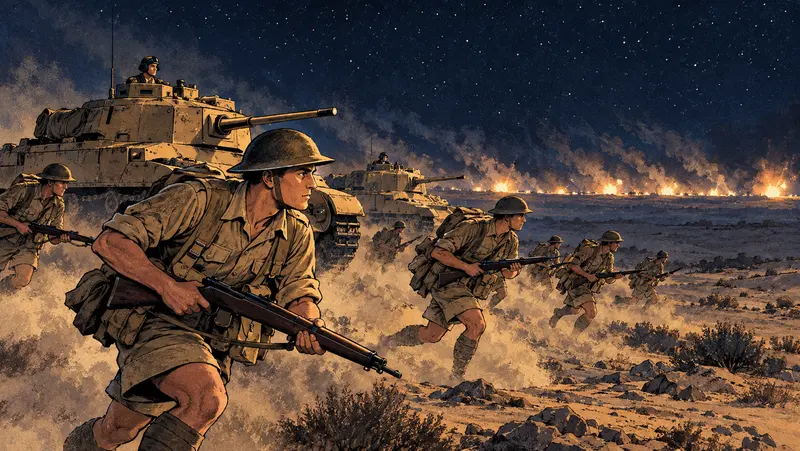 23 October 1942El AlameinEl Alamein, EgyptIn the North African desert, British and Allied forces attacked at El Alamein on 23 October 1942 and drove back Rommel’s army. The Allies fought on many fronts, bringing the shared victory closer.
Chapter 18 · November 1942
The ring closes
On 19 November Operation Uranus began. Four days later Soviet tank crews met at Kalach, and about 300,000 enemy soldiers were trapped in the ring. It was the beginning of the great turning point of the war.
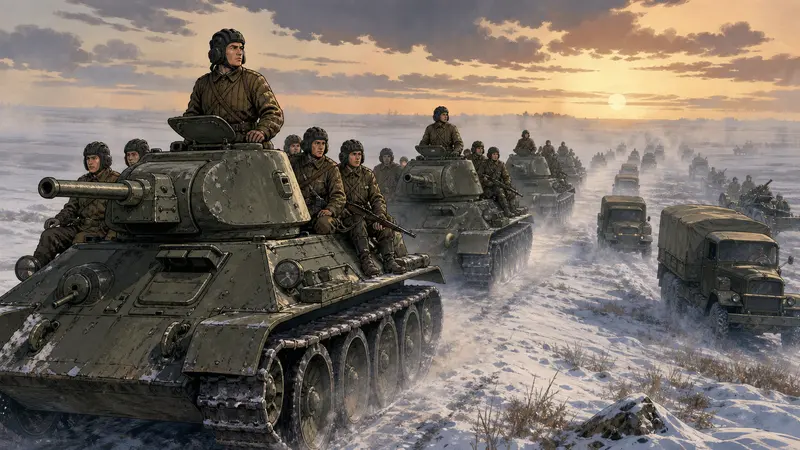 19 November 1942Operation UranusNorth-west of StalingradOn the foggy morning of 19 November 1942 thousands of guns thundered: the counter-offensive at Stalingrad had begun. It had been prepared in the strictest secrecy. Blows from the north and the south were to meet behind the enemy’s back.
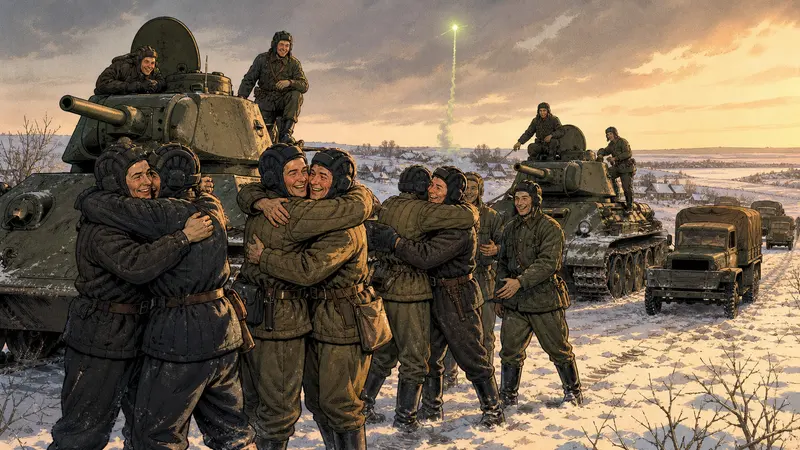 23 November 1942The ring is closedKalach-on-DonOn 23 November 1942 tank crews from two fronts met near the village of Sovetsky. They hugged right there in the snow. Paulus’s 6th Army, more than 300,000 enemy soldiers, was trapped.
Chapter 19 · December 1942
Hot snow
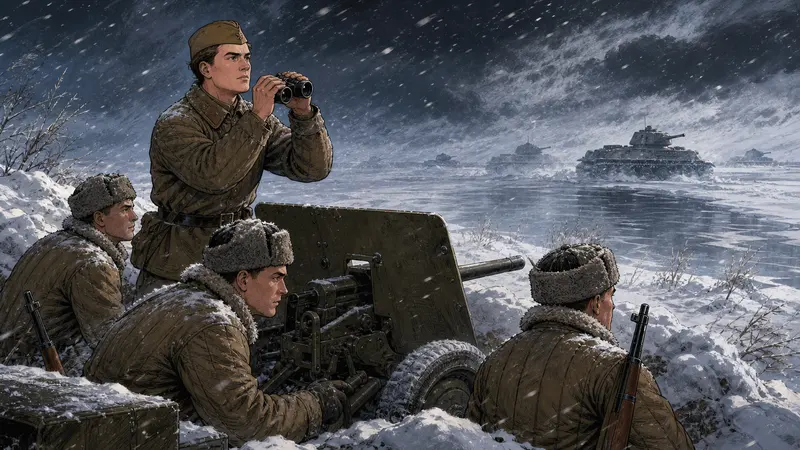
The enemy tried to break through to Paulus's encircled army. Soviet soldiers stopped it on the Myshkova river in savage fighting. By New Year it was clear: the Stalingrad ring would not be broken.
Chapter 20 · January 1943
The siege is broken
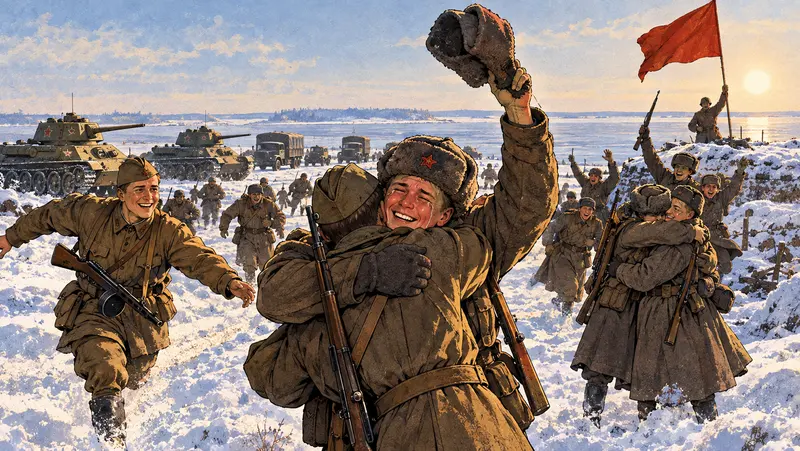
On 18 January troops of the Leningrad and Volkhov Fronts met near Shlisselburg, and the siege was broken. In the south the Red Army was liberating the North Caucasus. The enemy trapped at Stalingrad could no longer escape.
Chapter 21 · February 1943
Victory on the Volga
On 2 February the Battle of Stalingrad ended: 91,000 enemy soldiers and officers surrendered. The Red Army freed Kursk, Rostov-on-Don and Kharkov. The enemy's flags were torn down from the summit of Elbrus.
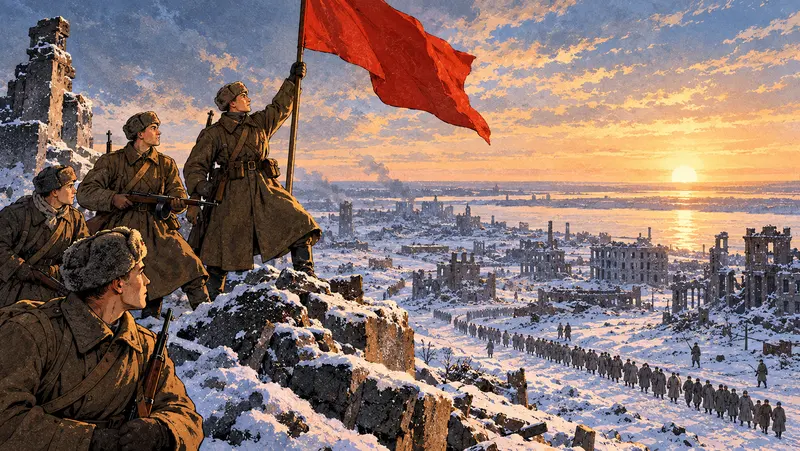 2 February 1943Victory at StalingradStalingradOn 2 February 1943 the Battle of Stalingrad ended. The encircled army surrendered and Field Marshal Paulus was captured. Germany declared national mourning. It was the radical turning point: now the Red Army was moving forward, to the west.
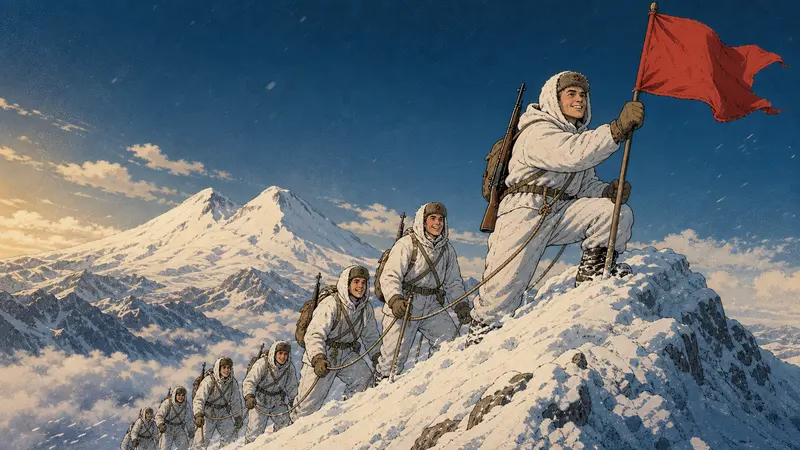 17 February 1943Climbers on ElbrusMount Elbrus, CaucasusIn summer 1942 the enemy planted its flags on Elbrus, Europe’s highest peak. In February 1943 Soviet military climbers ascended both summits in a blizzard, took down the enemy banners and raised Soviet flags.
Chapter 22 · March 1943
The grief of Khatyn
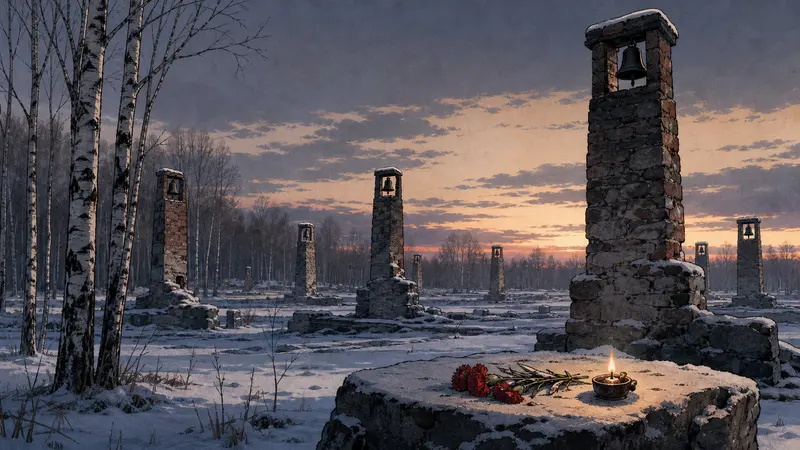
The enemy recaptured Kharkov and the front came to a halt. In Belarus punitive troops burned the village of Khatyn together with its people. Partisans struck back at the enemy's roads and trains.
Chapter 23 · April 1943
The skies over the Kuban
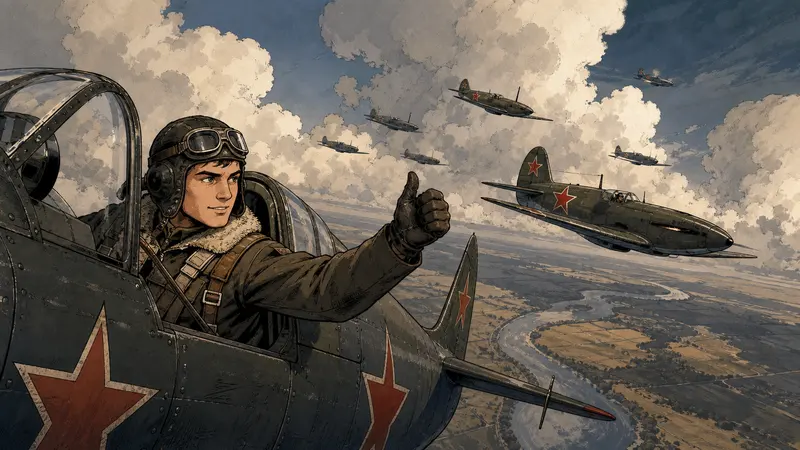
Huge air battles raged over the Kuban. Here the pilot Alexander Pokryshkin and his comrades became famous. Soviet aviation was no longer weaker than the enemy in the sky.
Chapter 24 · May 1943
Everything for the front!
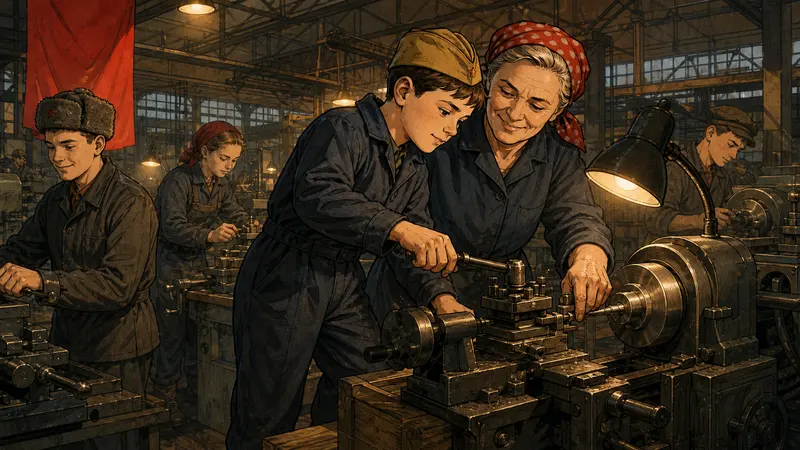
The front fell quiet: both sides were preparing for the decisive summer battle. On the home front people worked day and night: women, old people and teenagers stood at the machines, some so small they needed boxes to stand on.
Chapter 25 · June 1943
The calm before the storm
Near Kursk Soviet troops built a deep defence: thousands of kilometres of trenches, minefields and anti-tank ditches. The women pilots of the “Night Witches” regiment took to the skies over Taman every night.
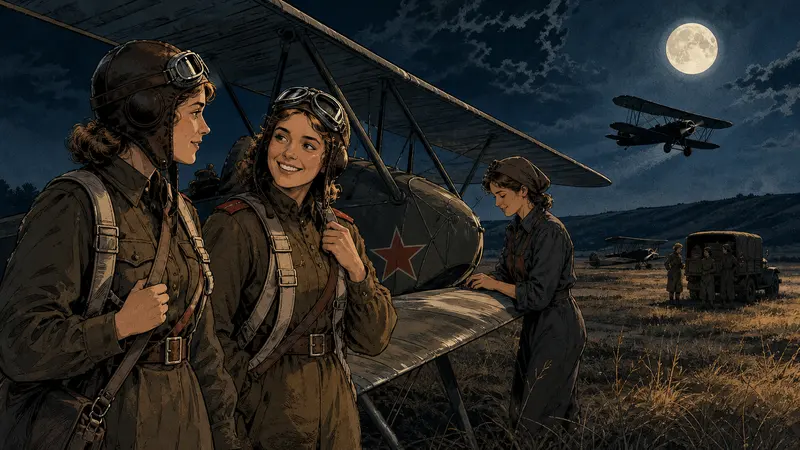
Chapter 26 · July 1943
The arc of fire
On 5 July the enemy struck at the Kursk Bulge. On 12 July hundreds of tanks clashed at Prokhorovka. Having stopped the enemy, the Red Army went on the attack itself, and the Allies landed in Sicily.
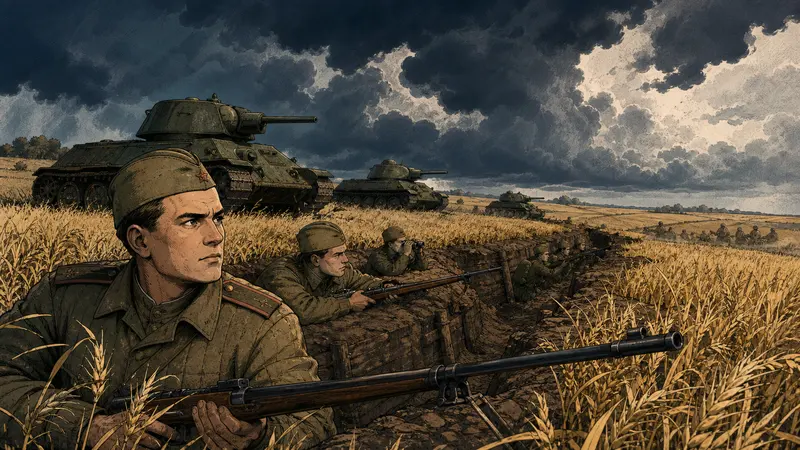 5 July 1943The Battle of KurskThe Kursk BulgeOn 5 July 1943 the enemy launched its last major offensive on the Eastern Front, at Kursk. But the Soviet command knew its plans and had prepared powerful defences. One of the largest battles in history began.
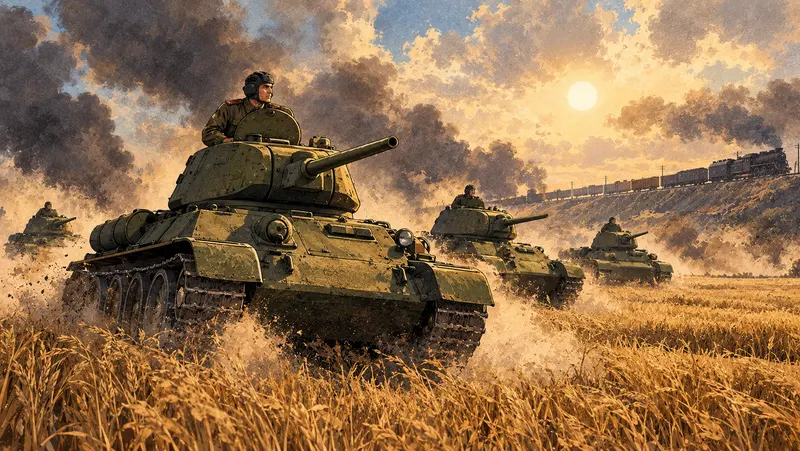 12 July 1943The tank field of ProkhorovkaProkhorovkaOn 12 July 1943, near Prokhorovka station, one of the largest tank battles in history took place. The ground shook and smoke covered the sky. The enemy did not get through, and its Kursk offensive failed.
Chapter 27 · August 1943
The first salute
On 5 August Orel and Belgorod were freed, and for the first time a victory salute thundered over Moscow. On 23 August Kharkov was freed, and the Battle of Kursk ended in victory. From now on the enemy was retreating for good.
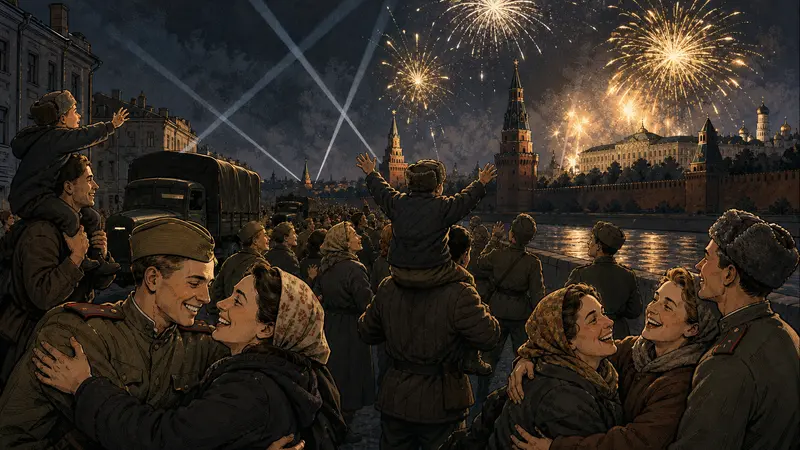 5 August 1943The first victory saluteMoscow · Oryol · BelgorodOn 5 August 1943 Oryol and Belgorod were liberated. That evening Moscow fired its first salute of the war in honour of the liberators. From then on a salute followed every major victory, more than three hundred in all.
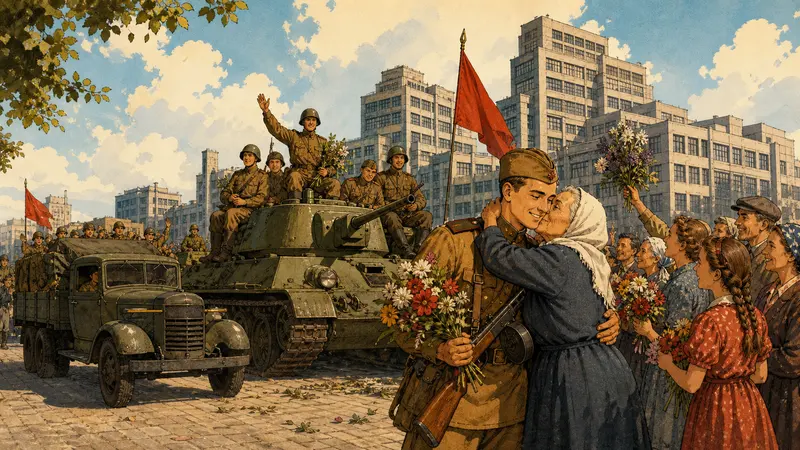 23 August 1943Kharkov is free, Kursk is wonKharkovOn 23 August 1943 Kharkov was liberated and the Battle of Kursk ended in victory. After Stalingrad and Kursk the initiative passed to the Red Army for good.
Chapter 28 · September 1943
To the Dnieper!
The Red Army freed the Donbass, Bryansk and Smolensk and reached the Dnieper. The enemy called the river its “Eastern Wall” and hoped to hold it. The Allies landed in Italy, and Italy left the war.
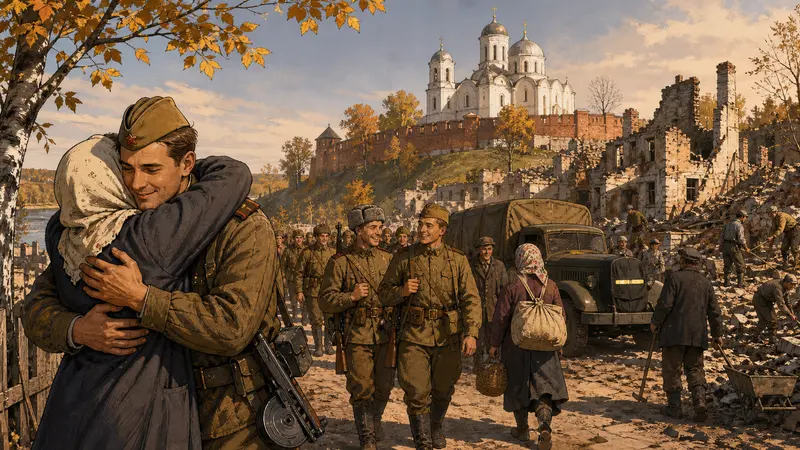
Chapter 29 · October 1943
Across the river under fire
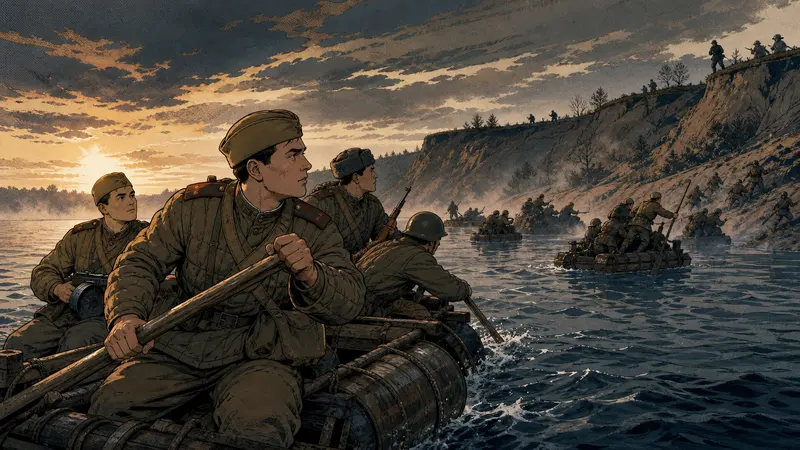
Soldiers crossed the wide Dnieper on rafts, boats, barrels and even by swimming. On the western bank they seized small bridgeheads and held them with their last strength. Zaporozhye and Melitopol were freed.
Chapter 30 · November 1943
Kiev and Tehran
Kiev was freed on 6 November. And at the end of the month the leaders of the USSR, the USA and Britain (Stalin, Roosevelt and Churchill) met for the first time, in Tehran. They agreed to open a second front.
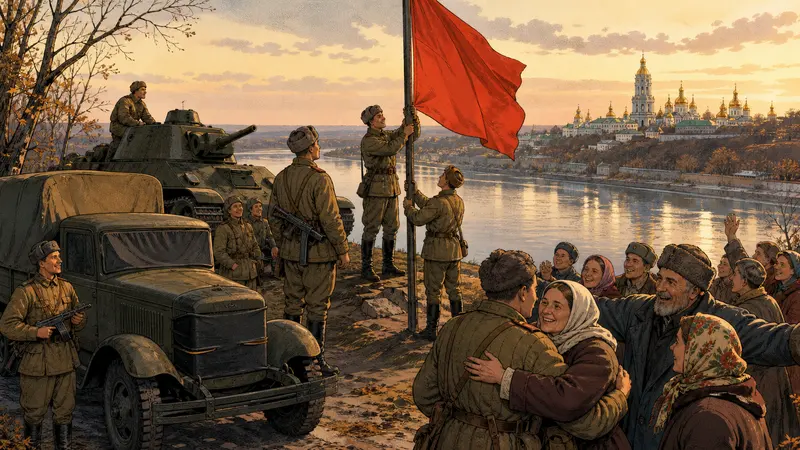 6 November 1943Kiev is liberatedKievOn 6 November 1943 Kiev was liberated. The city on the Dnieper had been occupied for more than two years. That evening Moscow saluted the liberators with 24 salvos from 324 guns.
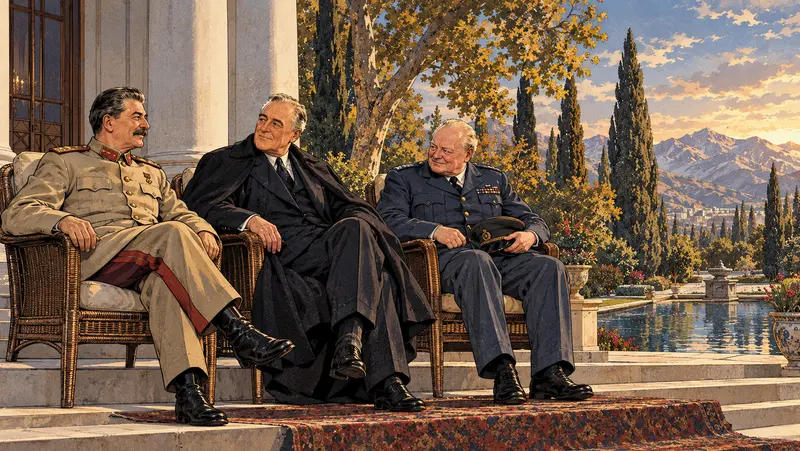 28 November 1943The Tehran ConferenceTehranFrom 28 November to 1 December 1943 the “Big Three” (Stalin, Roosevelt and Churchill) met for the first time, in Tehran. They agreed that in spring 1944 the Allies would open a second front in France. A declaration on Iran’s sovereignty and independence was also adopted there.
Chapter 31 · December 1943
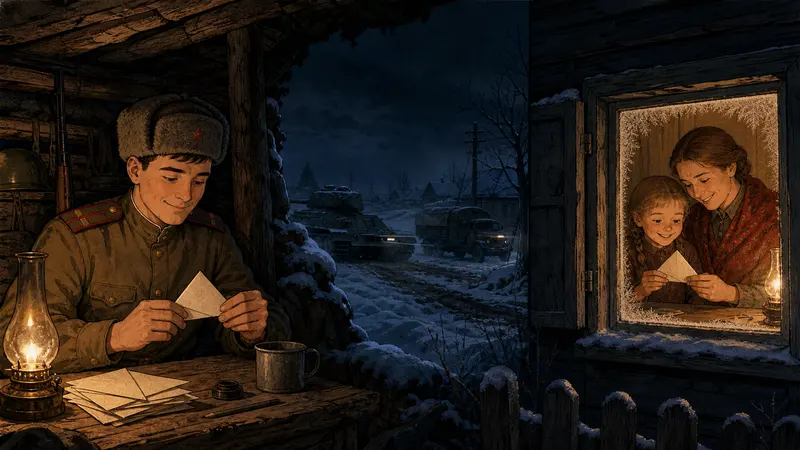
Triangle letters
The third winter of the war set in. In the trenches soldiers wrote letters home and waited for replies. The Red Army kept fighting on the right bank of the Dnieper, and the Allies began preparing to land in France.
Chapter 32 · January 1944
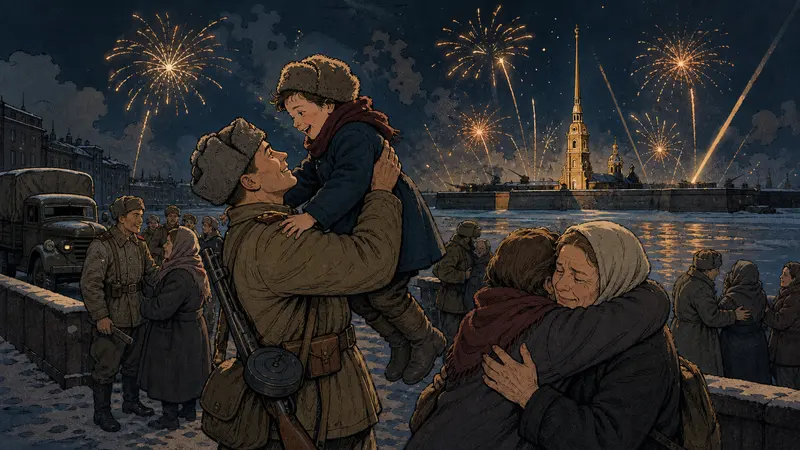
872 days behind us
On 27 January the siege of Leningrad was lifted completely. A salute thundered over the city; people wept and embraced in the streets. In Ukraine the battle for Korsun-Shevchenkovsky began.
Chapter 33 · February 1944
“Stalingrad on the Dnieper”
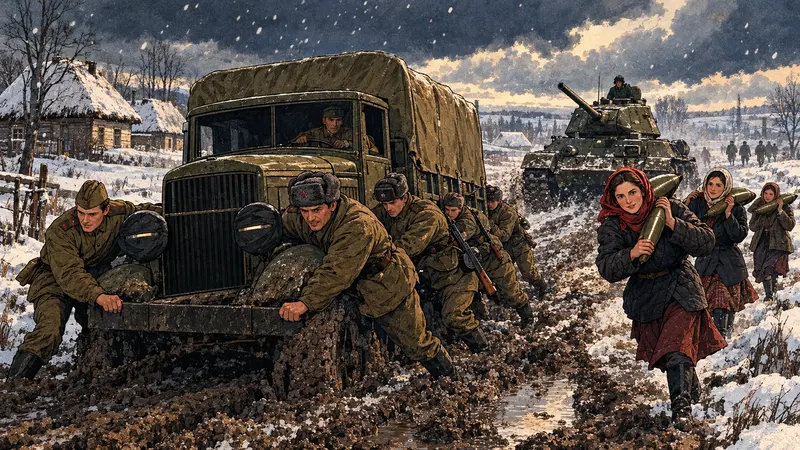
At Korsun-Shevchenkovsky tens of thousands of enemy soldiers were encircled. Nikopol and Krivoy Rog were freed. The Red Army advanced through the spring thaw, knee-deep in mud.
Chapter 34 · March 1944
Back to the border!
On 26 March Soviet troops reached the river Prut, the state border of the USSR. Kherson, Vinnitsa and Nikolaev were freed. The war was beginning to return to where it had come from.
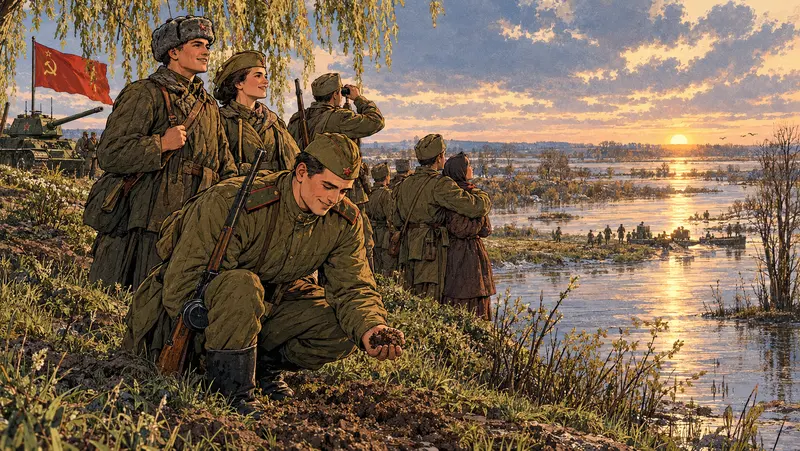
Chapter 35 · April 1944
A spring of liberation
On 8 April the liberation of Crimea began, and on 10 April Odessa was freed. People came out to meet the soldiers with flowers; many had lived under occupation for almost three years.
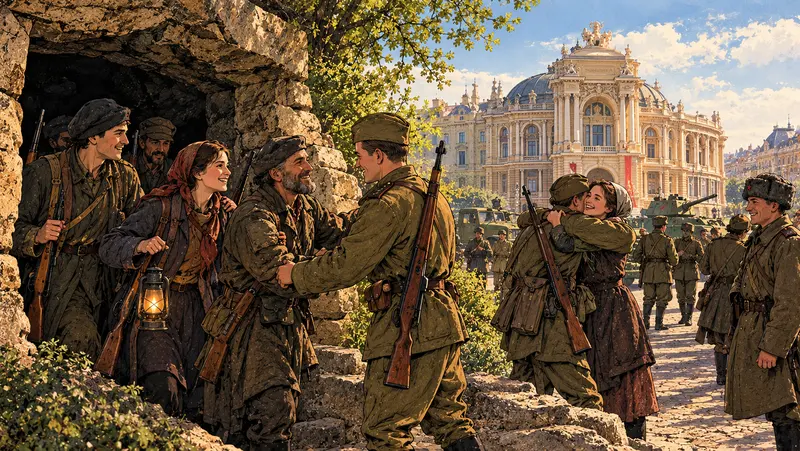
Chapter 36 · May 1944
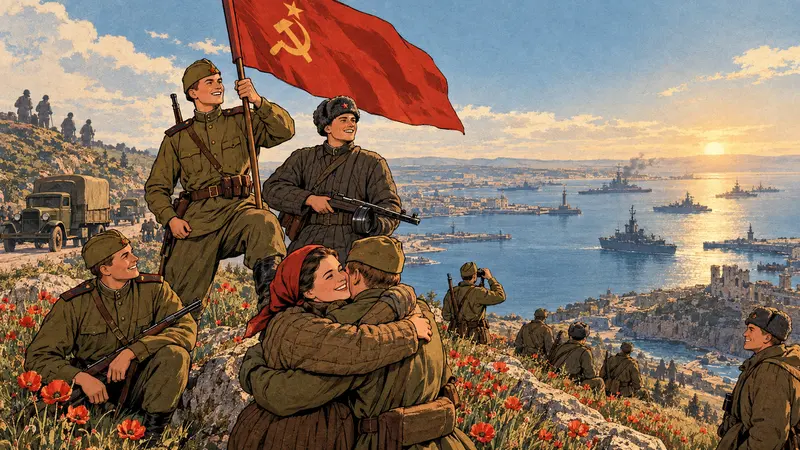
Sevastopol is free
Sevastopol was freed on 9 May, and all of Crimea by 12 May. The city the enemy had needed 250 days to take, the Red Army stormed in three days.
Chapter 37 · June 1944
The second front and Bagration
On 6 June the Allies landed in Normandy, and the second front was open. On 10 June an offensive began on the Karelian Isthmus. And on 23 June Operation Bagration, one of the largest in history, began in Belarus.
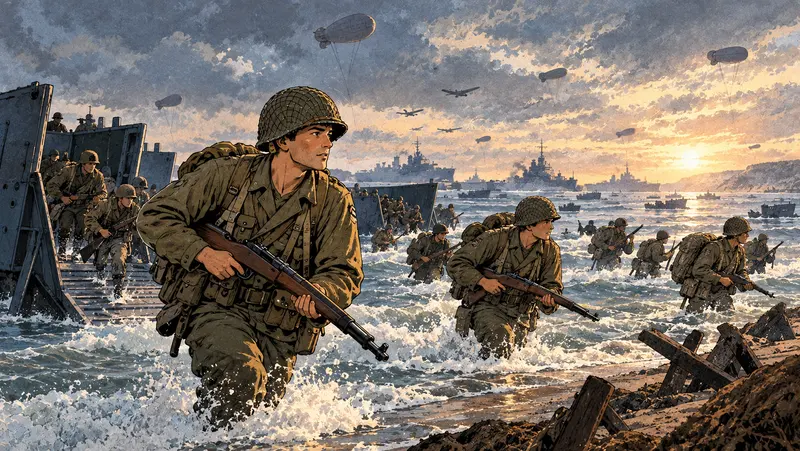 6 June 1944The second front opensNormandy, FranceOn 6 June 1944 troops from the USA, Britain, Canada and their allies landed in Normandy. It was the largest seaborne invasion in history. Germany was now squeezed from east and west.
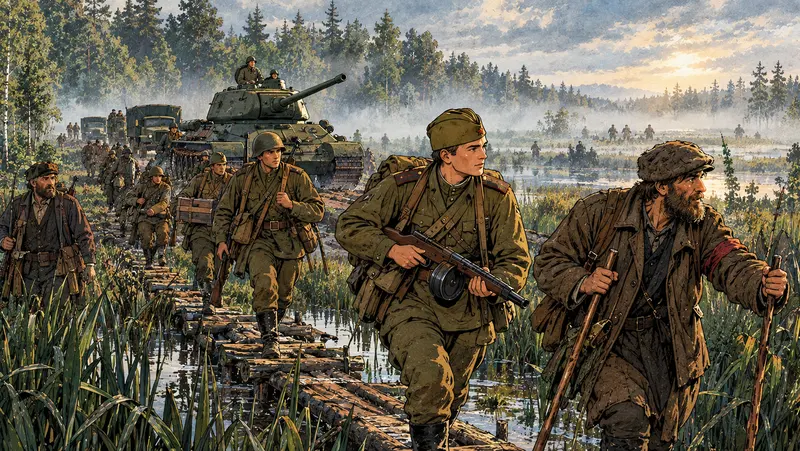 23 June 1944Operation BagrationBelarusOn 23 June 1944 the liberation of Belarus began. The operation was named after General Bagration, a hero of the 1812 war. Belarusian partisans gave the army enormous help. In two months the front moved hundreds of kilometres west.
Chapter 38 · July 1944
Belarus is free
Minsk was freed on 3 July, Vilnius on 13 July. On 17 July 57,600 captured enemy soldiers were marched through the streets of Moscow. The Red Army entered Poland.
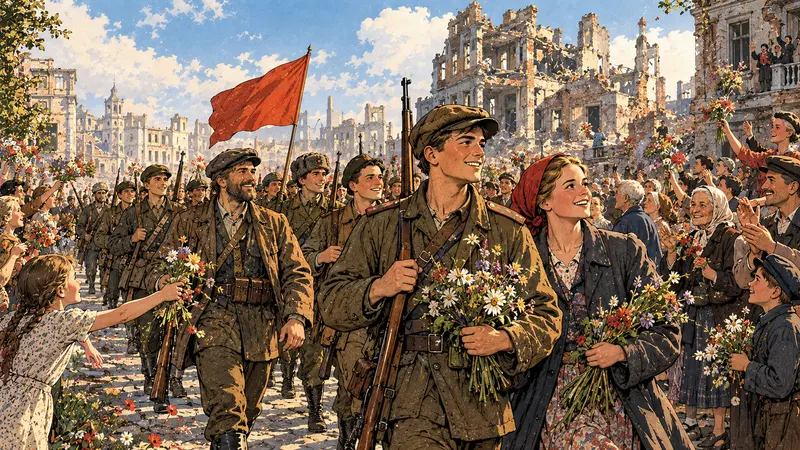 3 July 1944Minsk is liberatedMinskOn 3 July 1944 Minsk, the capital of Belarus, was liberated. Today it is the country’s main holiday, Belarus Independence Day. By various estimates, one in four (or even one in three) people in Belarus died in the war.
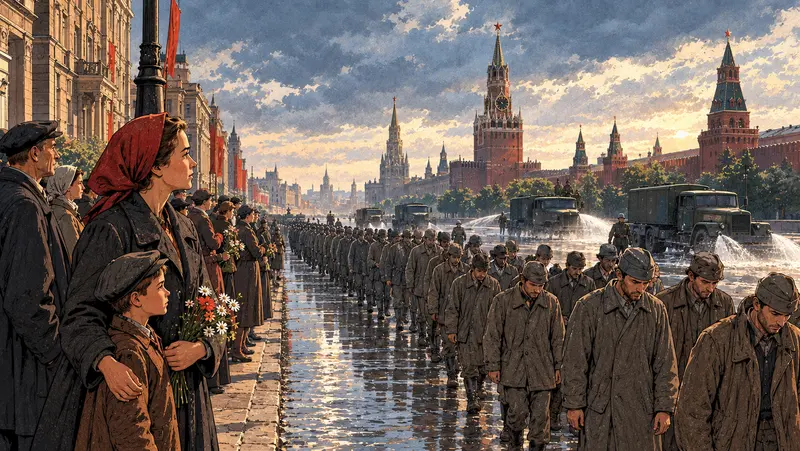 17 July 1944The “Parade of the Defeated”Garden Ring, MoscowThe enemy had promised to march through Moscow, and it did, but not as planned. On 17 July 1944, 57,000 prisoners captured in Belarus were marched through the capital. Muscovites watched in silence. Behind the column came street-cleaning trucks, washing the roads.
Chapter 39 · August 1944
Hitler's allies turn away
A large enemy force was encircled near Iași and Kishinev, and on 23 August Romania went over to the anti-Hitler coalition. Paris was freed on 25 August. In Warsaw an uprising was under way.
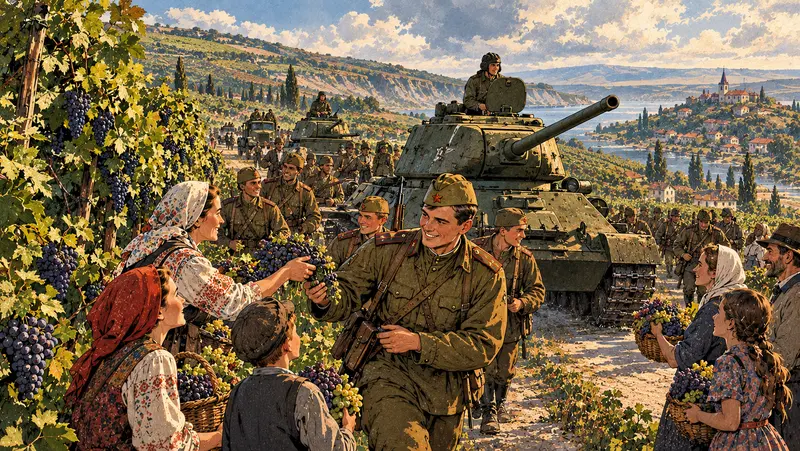 20 August 1944The Iași–Kishinev operationKishinev and IașiOn 20 August 1944 an offensive began in the south. Within days Moldavia was liberated, and Romania, Germany’s ally, left the war on 23 August and turned its arms against Germany.
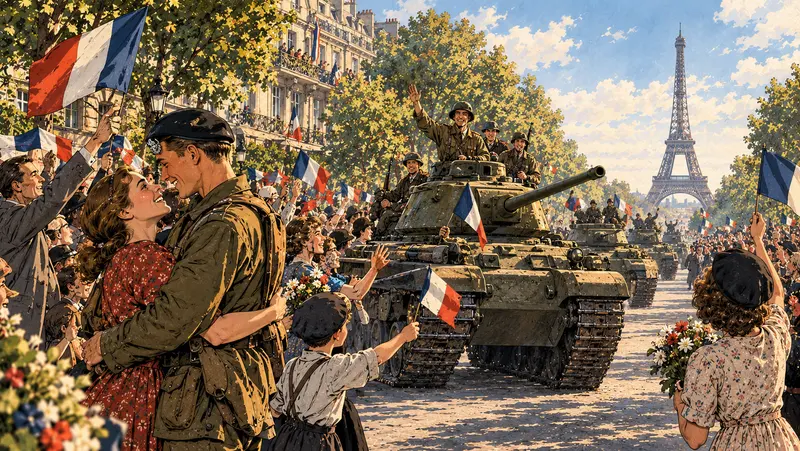 25 August 1944Paris is freeParisOn 25 August 1944 French and American troops, together with Parisians who had risen up, liberated Paris. Meanwhile the Soviet-French “Normandie-Niemen” air regiment was fighting on the Eastern Front.
Chapter 40 · September 1944
Finland and Bulgaria leave the war
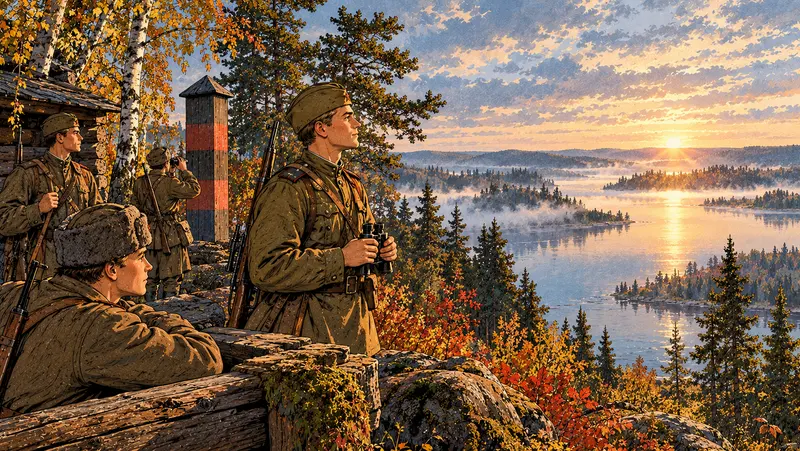
On 9 September Bulgaria went over to the Soviet side, and on 19 September Finland signed an armistice. Tallinn was freed on 22 September. Germany's circle of allies was falling apart.
Chapter 41 · October 1944
Beyond the homeland
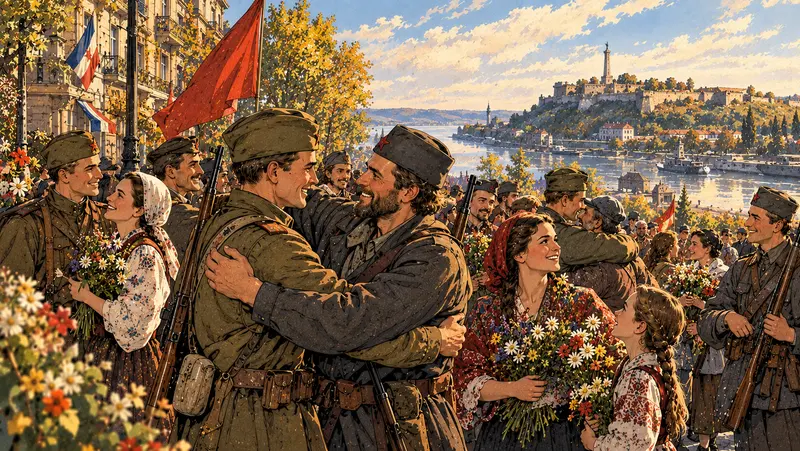
Riga was freed on 13 October. Together with Yugoslav partisans the Red Army freed Belgrade. In the far north the enemy was driven out of the Arctic, and heavy fighting began in Hungary and East Prussia.
Chapter 42 · November 1944
The homeland is free
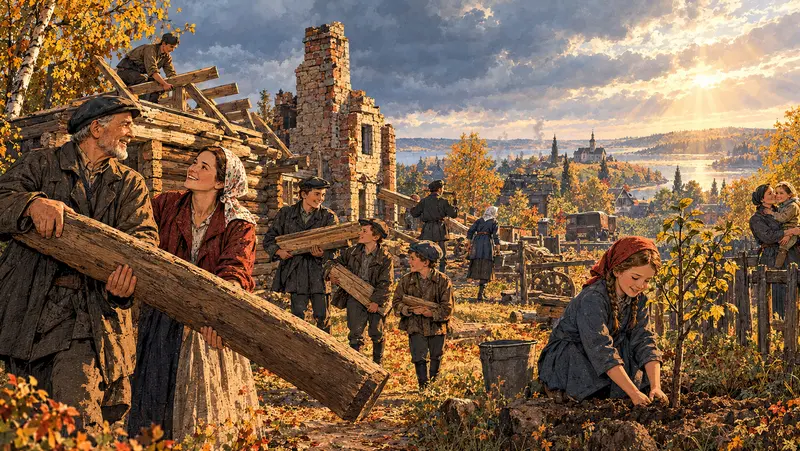
Almost all of the USSR had been freed; the enemy held on only in Courland, in western Latvia. The country that had lived through occupation began to rebuild thousands of ruined towns and villages.
Chapter 43 · December 1944
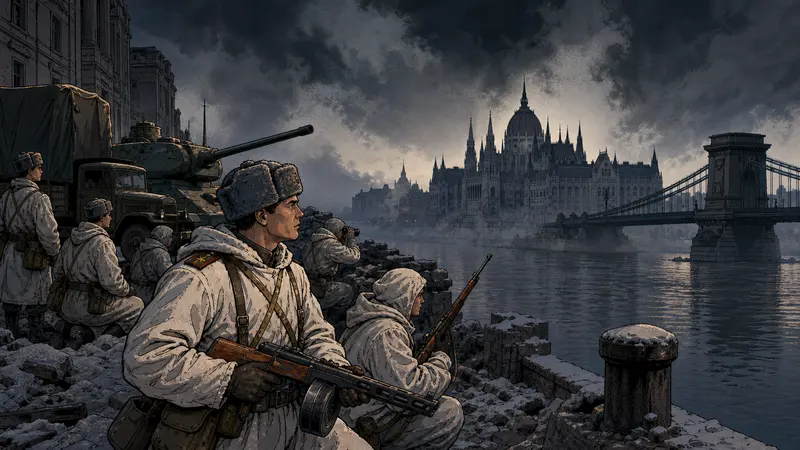
A ring around Budapest
On 26 December Soviet troops encircled Budapest. In the west the enemy struck its last heavy blow against the Allies in the Ardennes. The last wartime New Year was approaching.
Chapter 44 · January 1945
500 kilometres in 20 days
On 12 January the Vistula–Oder offensive began. Warsaw was freed on 17 January, the prisoners of Auschwitz on 27 January. Soviet troops reached the Oder: Berlin was only about 70 kilometres away.
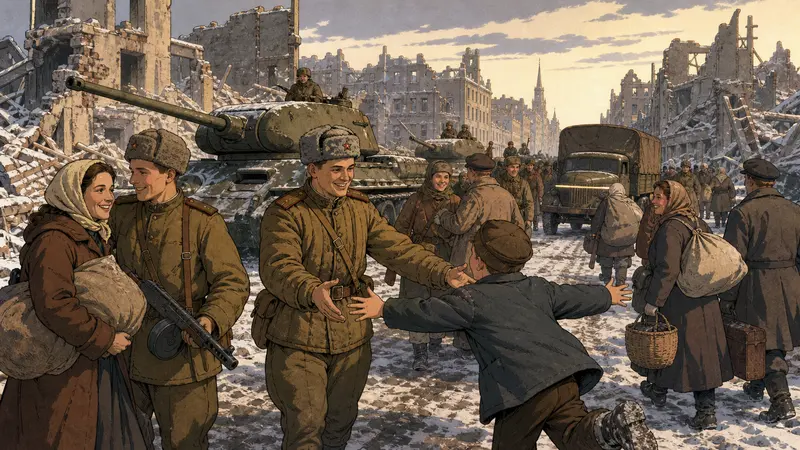 17 January 1945The Vistula–Oder offensiveWarsawOn 12 January 1945 a rapid offensive began from the Vistula to the Oder. On 17 January ruined Warsaw was liberated. In three weeks the troops advanced about 500 km and reached the Oder, 70 km from Berlin.
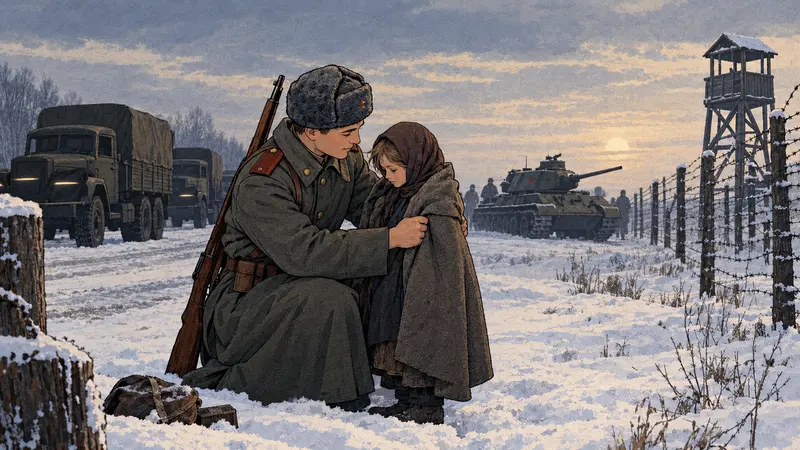 27 January 1945The liberation of AuschwitzAuschwitzOn 27 January 1945 Red Army soldiers entered Auschwitz, the largest Nazi death camp. More than a million people had been murdered there, most of them Jews. Only a few thousand survivors remained, among them children. Today 27 January is International Holocaust Remembrance Day.
Chapter 45 · February 1945
Decisions at Yalta
On 4–11 February the Allied leaders met at Yalta to decide what the post-war world would look like. Budapest fell on 13 February. Heavy fighting raged in East Prussia and Pomerania.
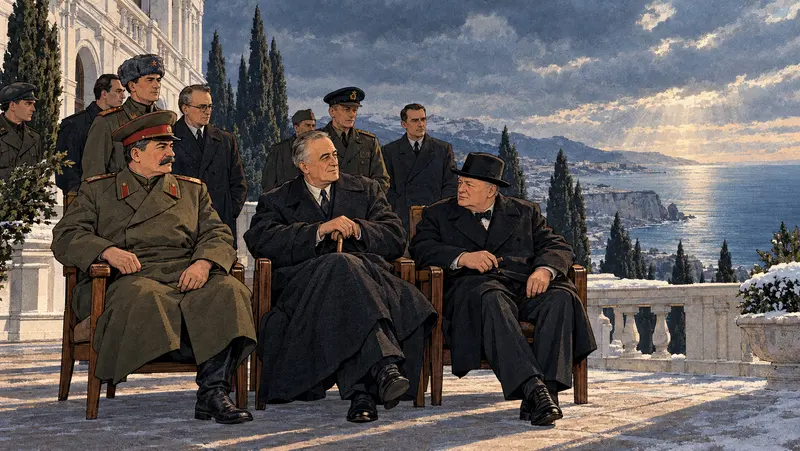 4 February 1945The Yalta ConferenceYalta, CrimeaOn 4–11 February 1945 the Big Three met at the Livadia Palace in Yalta. The Allies agreed how to end the war and what the post-war world would look like, and decided to create the United Nations.
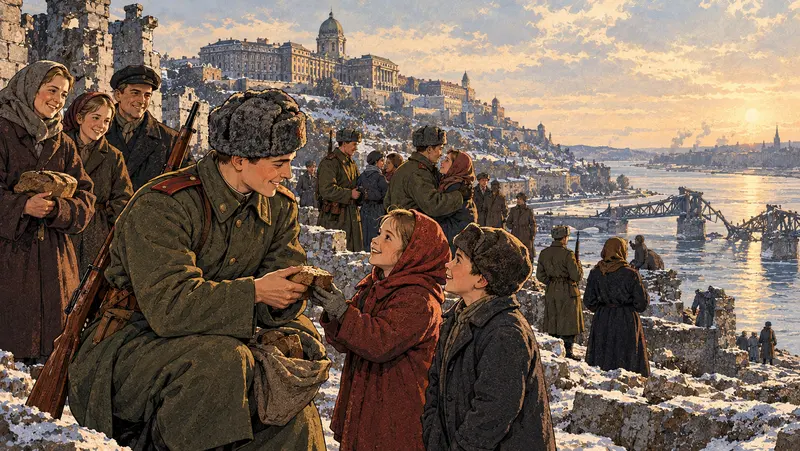 13 February 1945Budapest is takenBudapestOn 13 February 1945 the battle for Budapest ended. The capital of Hungary, Germany’s last ally in Europe, was freed after long street fighting.
Chapter 46 · March 1945
The enemy's last blows
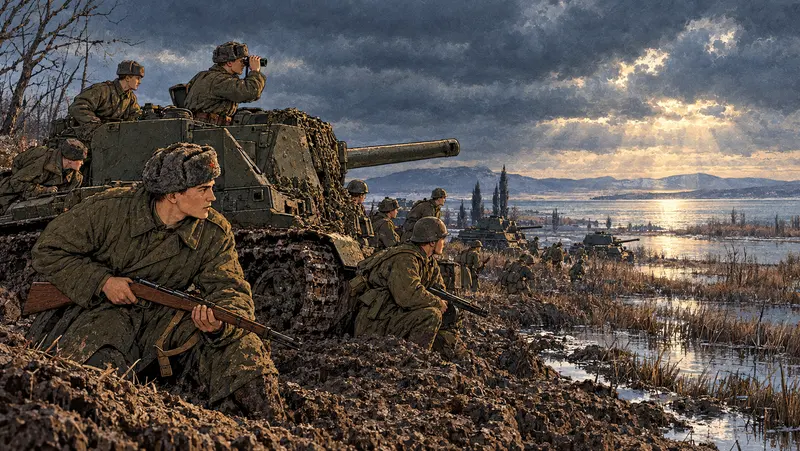
At Lake Balaton the enemy threw in its last tank reserves and lost. The Red Army was preparing to advance on Vienna and Berlin, and the Allies crossed the Rhine.
Chapter 47 · April 1945
The storming of Berlin
Königsberg was taken on 9 April and Vienna freed on 13 April. On 16 April the Berlin offensive began, and on 25 April Soviet and American soldiers met on the Elbe.
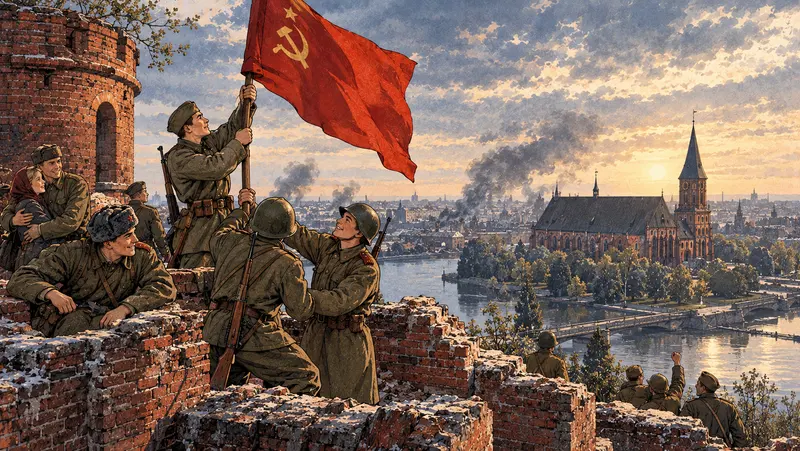 9 April 1945The storming of KönigsbergKönigsberg (Kaliningrad)Königsberg was thought to be an impregnable fortress. But on 9 April 1945, after four days of assault, its garrison surrendered. After the war the city became part of Russia and was renamed Kaliningrad.
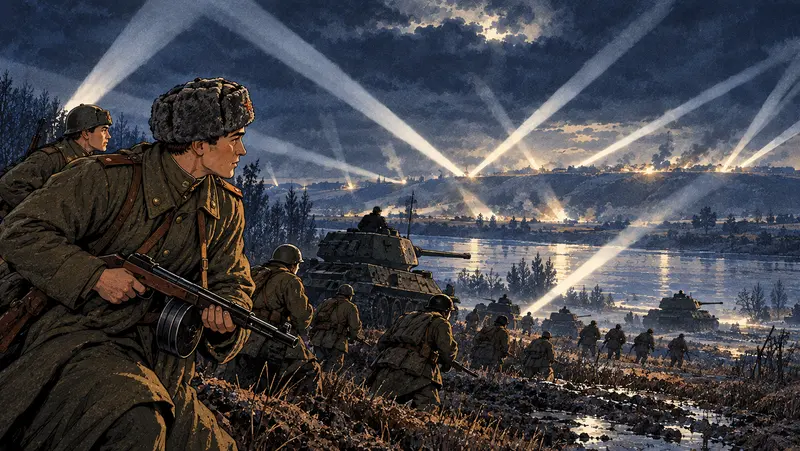 16 April 1945Forward to Berlin!The Seelow HeightsBefore dawn on 16 April 1945 the Berlin operation began. 140 powerful searchlights shone straight into the defenders’ eyes. The fighting on the Seelow Heights was very hard, but within days the troops broke into Berlin’s suburbs.
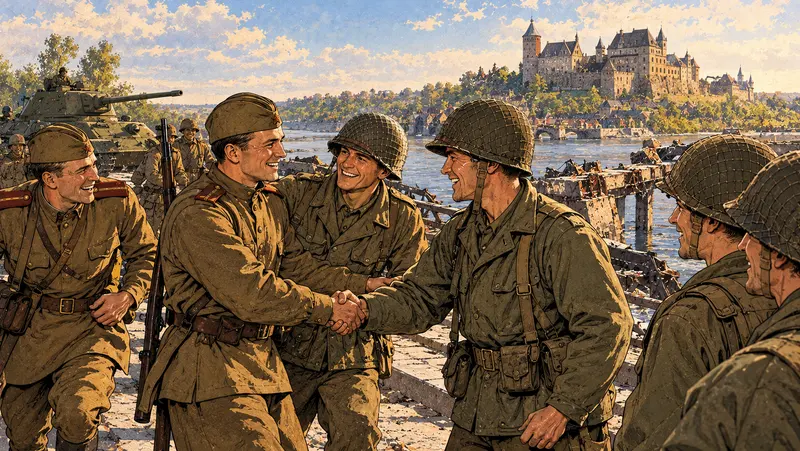 25 April 1945Meeting on the ElbeTorgau, the ElbeOn 25 April 1945 Soviet and American soldiers met at Torgau on the Elbe. They shook hands and swapped badges and souvenirs. Germany had been cut in two.
Chapter 48 · May 1945
Victory!
On 1 May the Victory Banner flew over the Reichstag, and on 2 May the Berlin garrison surrendered. In the night before 9 May Germany's unconditional surrender was signed. Prague was freed that same day.
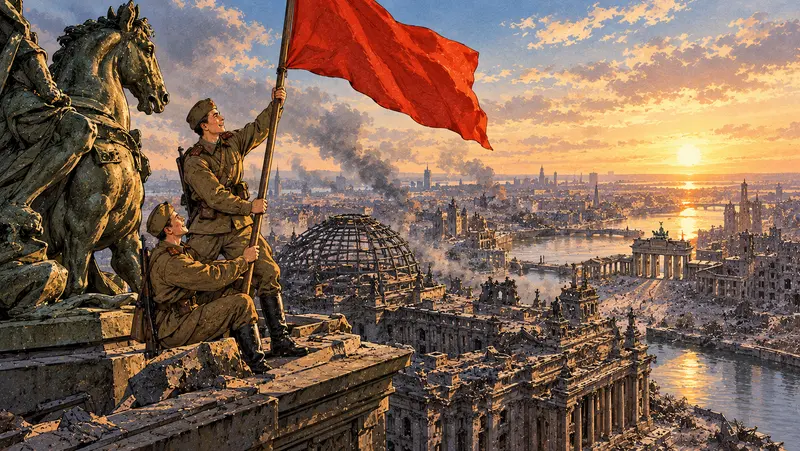 1 May 1945The Victory Banner over the ReichstagThe Reichstag, BerlinOn the night of 30 April to 1 May 1945, scouts Mikhail Yegorov and Meliton Kantaria, led by Lieutenant Alexei Berest, raised the Victory Banner over the Reichstag. On 2 May the Berlin garrison surrendered. Soldiers wrote their names on the Reichstag walls.
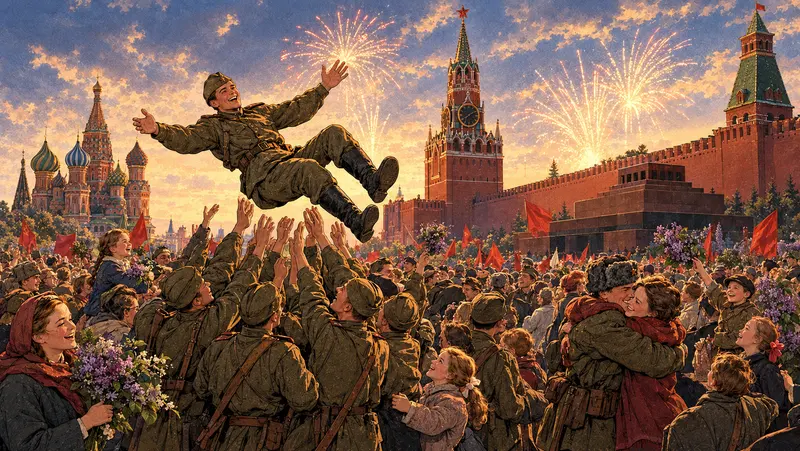 9 May 1945VICTORY!Moscow and the whole countryLate on 8 May, Germany’s unconditional surrender was signed in Berlin; in Moscow it was already 9 May. Radio announcer Yuri Levitan declared: the war is over! People ran into the streets, hugging strangers and soldiers. That evening the Victory salute thundered over Moscow: 30 salvos from a thousand guns.