
Navid Zamani
- Website and app design and development
- SEO
- Security
- Head of netanic.ir
Turned the idea into a living platform: the map, the animations, the Wall of Memory, and the project's speed, security and visibility in search.
Website: netanic.irAbout the project
1418 Days was made so that the memory of the Great Patriotic War, with all its grief and all its joy, stays alive: so that children and teenagers learn the truth about those years not from dry tables but on a living journey where every date has a person behind it.
Every year fewer people remain who saw the war with their own eyes, and with them go memories that were never told: letters kept in family boxes, photographs whose faces nobody remembers, stories that were only ever told around the family table.
We did not want this memory to shrink into a list of dates for an exam. We wanted a student growing up among games and screens to hear the great and small truths of those years: the 125 grams of siege bread, and the moment soldiers of two fronts embraced in the snow by Lake Ladoga. To show history as it was: bitter, joyful and full of courage.
Much of what children can read about the war is either too dry or shows violence that is wrong for their age. Between the two there was an empty space: a source that is accurate and gripping, honest and gentle with a young reader.
The events of the war are also usually told one by one, although they happened at the same time. While Stalingrad fought for every house, Leningrad heard the Seventh Symphony and teenagers in the Urals stood on boxes to reach their lathes. 1418 Days puts these pieces into one picture: the front, the home front and the world, month by month.
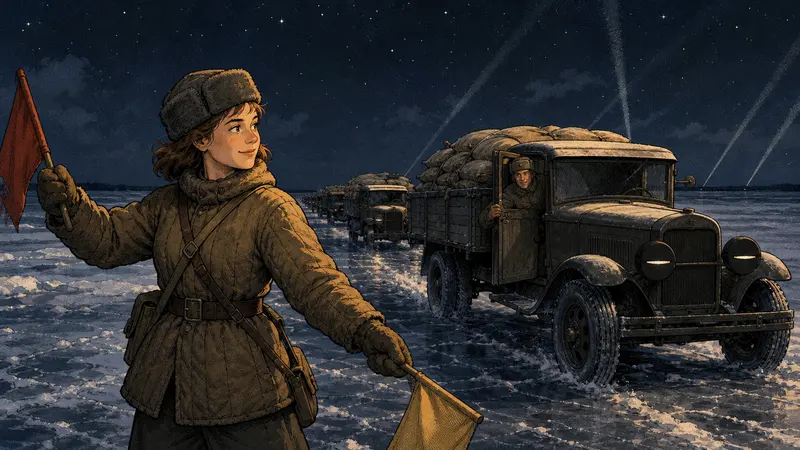
At the heart of the project is a world map with the borders of 1941. The front line moves day by day, and occupied land is hatched and shrinks as it is freed. Each of the 75 events has its own animated scene: advancing armies, encirclements, supply routes through Iran and the northern seas, the Road of Life across the ice of Ladoga. The map can be zoomed and dragged, and a strip of the war's 48 months runs along the bottom.
Every story has several layers: a simple telling, more detail for the curious, numbers that make sense at a glance, real quotations and a “Did you know?” corner. Each of the 48 chapters shows what the whole country and the world were living through that month. We wrote without graphic detail, but honestly, about the victories and the defeats alike.
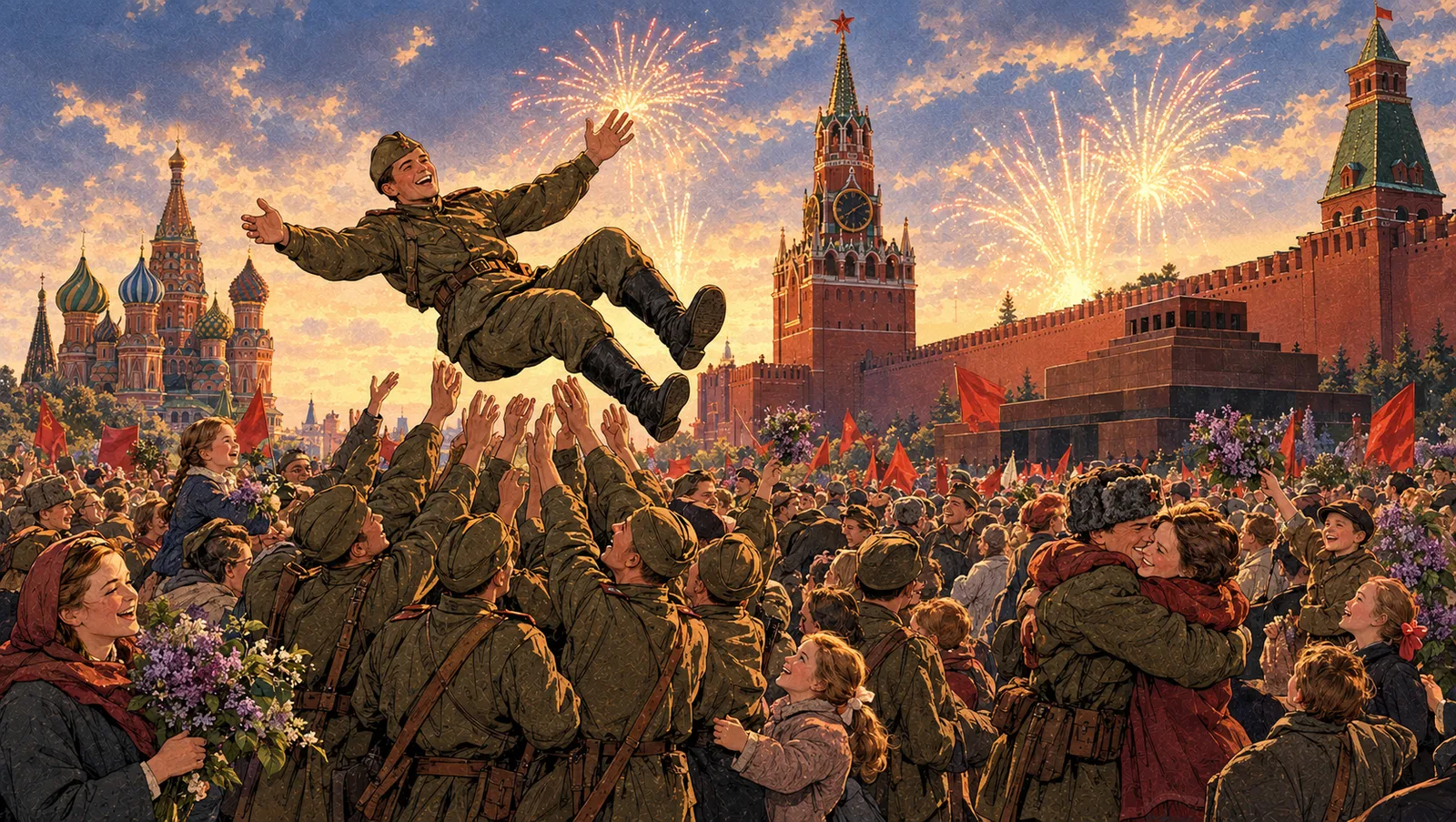
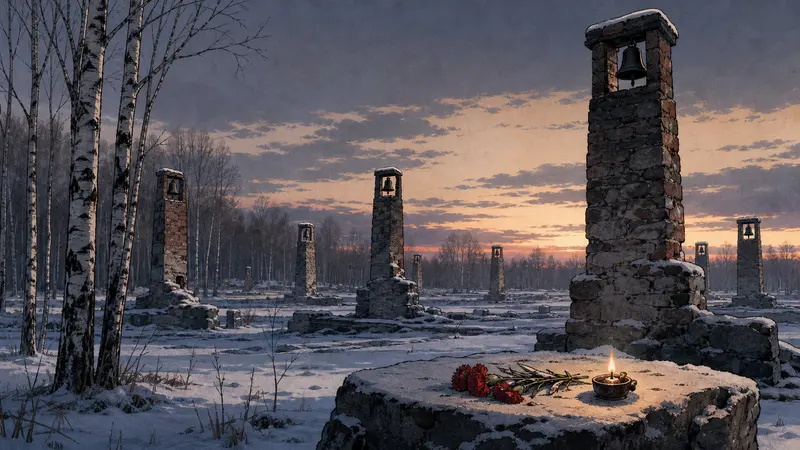
Every story has its own illustration in a single graphic-novel style, and each one was checked separately for historical accuracy: uniforms match the year (shoulder boards only arrived in 1943), equipment belongs to its time, and night scenes keep the wartime blackout. In the tragic stories we speak through symbols, not pain: the lonely chimneys of Khatyn with their bells, a soldier wrapping his greatcoat around a child.
Almost every family has a hero of its own. On the Wall of Memory, in the spirit of the Immortal Regiment, a child can tell the story of a great-grandparent and add their photo or a family keepsake. A moderator reviews every story, senders are asked only for a first name and age, and once a story is published its author receives the “Keeper of Memory” medal and a certificate in their own language.
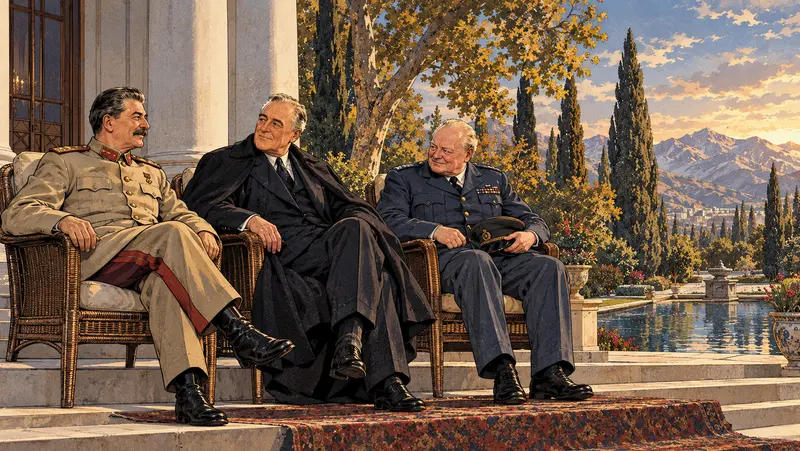
The project was built from the start in Russian, Persian and English. This memory is shared by many nations: a large part of Allied aid travelled through the Persian Corridor, and the leaders of the Big Three first met in Tehran. Iranian workers, drivers and railwaymen had their share in the Victory too.
We relied only on documented facts and avoided popular myths. There is not a single Nazi symbol anywhere on the site. It opens quickly on phones and computers, is protected with modern security measures, and every story has its own page so that search engines and digital assistants can find it.
1418 Days is the work of two people who shaped it together, from the first idea to the last illustration, bringing technology together with research and writing.

Turned the idea into a living platform: the map, the animations, the Wall of Memory, and the project's speed, security and visibility in search.
Website: netanic.ir
Brought a researcher's and writer's experience: working with sources, care for historical accuracy, and finding how to tell a child about the war honestly and gently.
Website: russlink.irThe memory of those 1,418 days should not live only in museums and archives. It should stay alive, told in a language today's generation can hear, so that no one is forgotten and nothing is forgotten.
Begin the journey